Hitler Fights World War II Differently
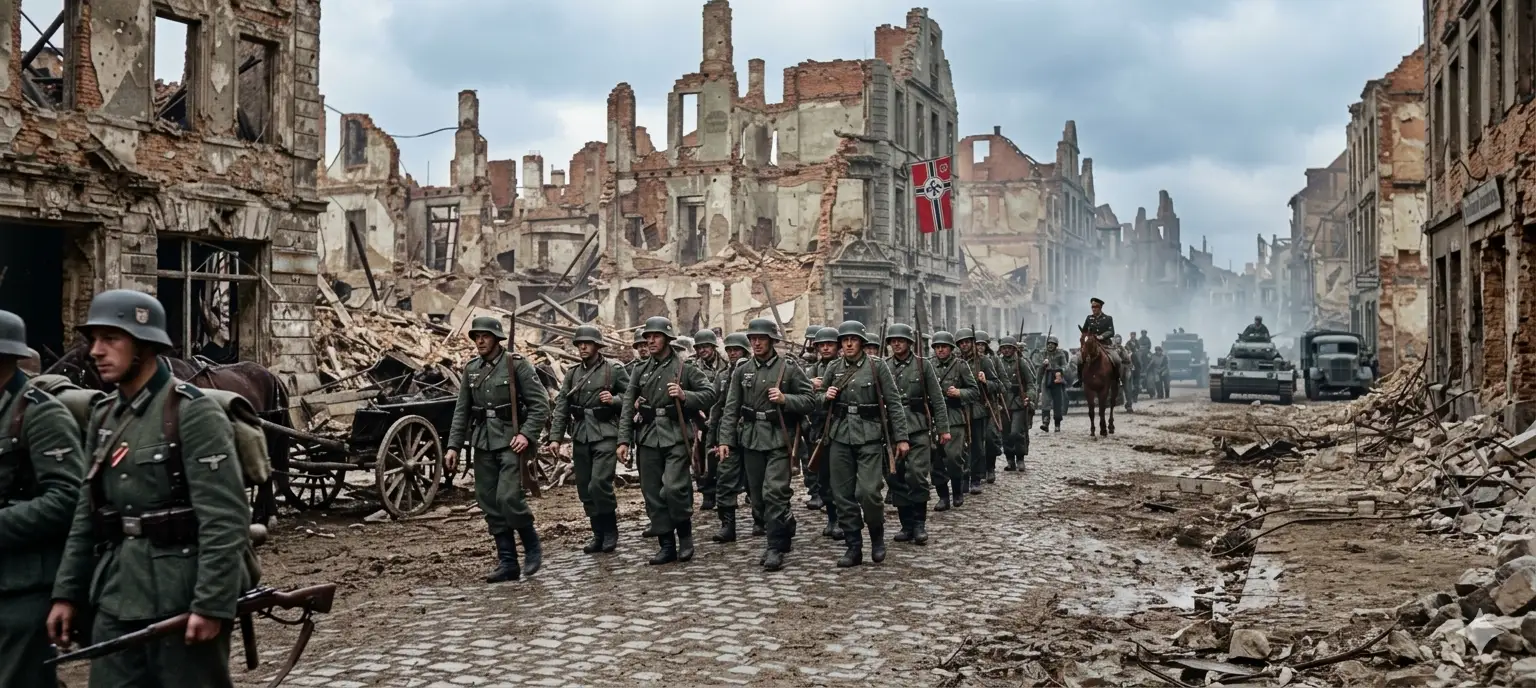
The end of the First World War in 1918 left Europe exhausted both politically and economically. Among all the defeated nations, Germany suffered the most severe consequences. Under the Treaty of Versailles, it was forced to accept responsibility for the war, surrender valuable territory, drastically reduce the size of its armed forces, and pay enormous reparations to the Allied powers. Many Germans viewed these harsh terms as a national humiliation rather than a fair peace settlement. Over the following years, economic crises, soaring inflation, widespread unemployment, and unstable governments deepened public frustration. It was during this period of uncertainty that Adolf Hitler and the Nazi Party rose to prominence, promising to restore Germany's lost pride, rebuild its military strength, and reverse the Treaty of Versailles. After becoming Chancellor in 1933, Hitler quickly eliminated political opposition, established a dictatorship under the Nazi Party, and began an extensive program of rearmament despite the treaty's restrictions.
As Germany regained its military and economic strength, Hitler adopted an increasingly aggressive foreign policy. Britain and France, still haunted by the devastation of the First World War, hoped to avoid another major conflict and therefore followed a policy of appeasement, believing that limited concessions might satisfy German demands. Instead, these concessions only encouraged Hitler to become more ambitious. Germany first remilitarized the Rhineland, then annexed Austria in 1938, and later acquired the Sudetenland through the Munich Agreement. In March 1939, German forces occupied the rest of Czechoslovakia, making it clear that Hitler's ambitions extended far beyond revising the Treaty of Versailles. Finally, on 1 September 1939, Germany invaded Poland, prompting Britain and France to declare war. Although Europe was once again at war, the Western Front remained largely quiet for several months, a period that came to be known as the Phoney War. It was during this uneasy pause that Hitler planned the campaign he believed would decide the fate of Western Europe—the invasion of France.
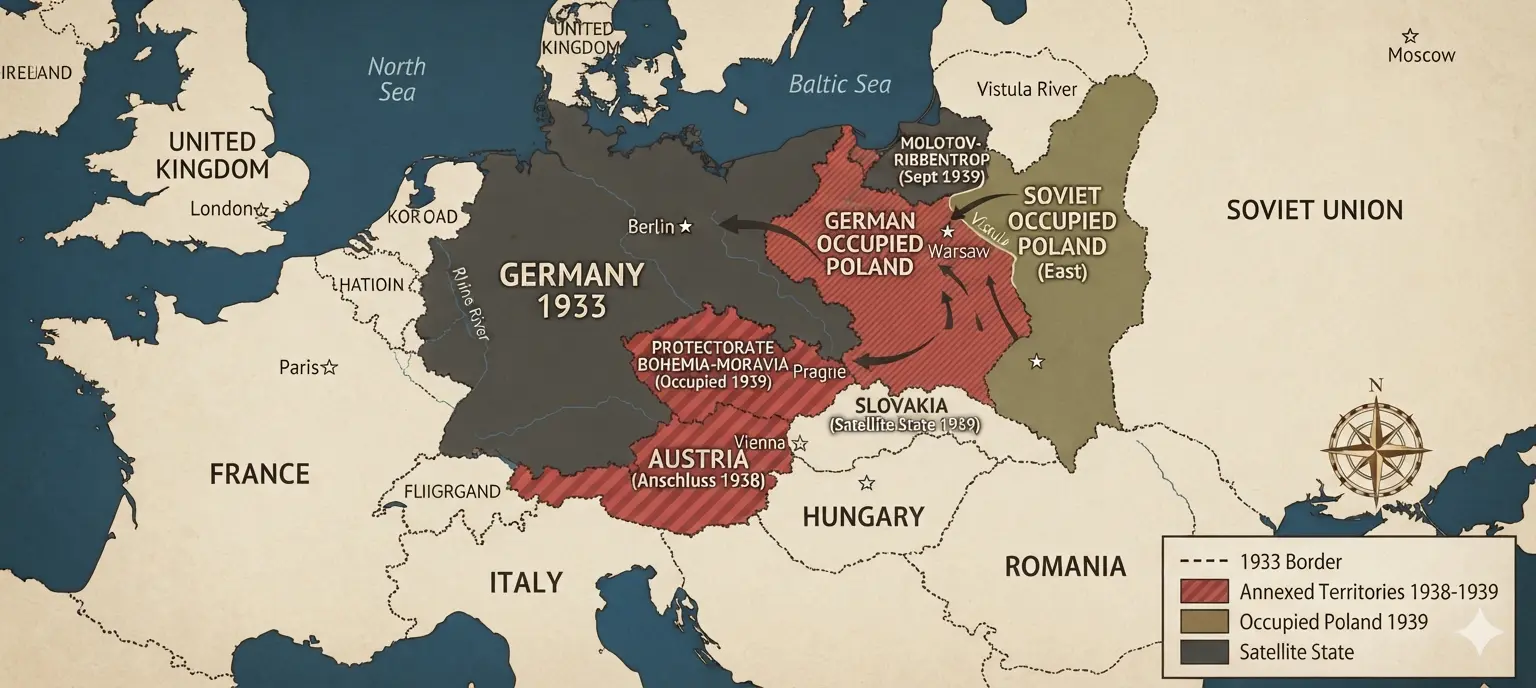
Before launching the invasion of France, Germany had already expanded far beyond the borders it possessed in 1933. In 1938, Austria was captured, followed by the peaceful acquisition of the Sudetenland under the Munich Agreement. In March 1939, German forces occupied the remainder of Czechoslovakia, establishing the Protectorate of Bohemia and Moravia while turning Slovakia into a friendly satellite state. The most significant expansion came on 1 September 1939, when Germany invaded Poland. Within weeks, the Polish Army was defeated, and the country was partitioned between Germany and the Soviet Union under the secret terms of the Molotov-Ribbentrop Pact. By May 1940, Germany controlled a vast territory stretching from the Rhine River deep into Eastern Europe, providing Hitler with the resources, industrial strength, and strategic position needed for his next great objective—the conquest of France.
Following the defeat of Poland in September 1939, Britain and France declared war on Germany, marking the beginning of the Second World War. During this time, France relied heavily on the formidable Maginot Line, a vast network of forts, bunkers, and underground defenses stretching along its border with Germany. Considered one of the strongest defensive systems in the world, it gave the French leadership confidence that any direct German attack could be successfully repelled. Meanwhile, Belgium and the Netherlands maintained their neutrality, hoping to stay out of the war altogether. Many Allied commanders expected Germany to repeat its First World War strategy by advancing through Belgium. While this assumption proved correct, they greatly underestimated the speed, coordination, and boldness of the offensive that Hitler and his generals had secretly prepared for the campaign in Western Europe.
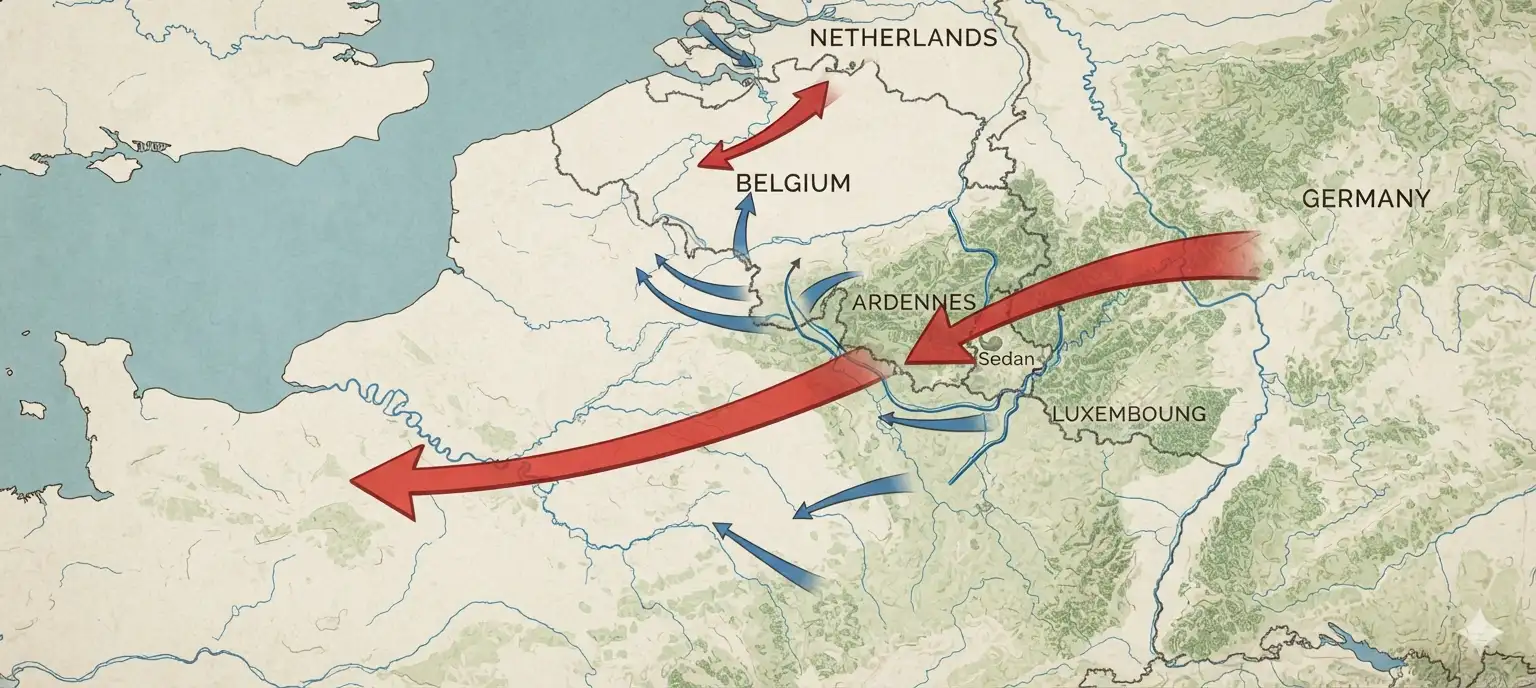
On 10 May 1940, Germany launched its long-planned offensive against Western Europe. In a coordinated assault, German forces crossed into the Netherlands, Belgium, and Luxembourg. To the Allied commanders, the invasion appeared to confirm what they had expected all along—that Germany would repeat its First World War strategy by advancing through Belgium. Acting on this assumption, the British Expeditionary Force (BEF) and the strongest French armies moved north to confront the invading Germans. Unknowingly, they were walking straight into a carefully planned trap.
The German plan, largely developed by General Erich von Manstein, relied on deception. While Army Group B advanced through Belgium and the Netherlands to draw Allied attention, the main striking force moved farther south through the Ardennes, a region of dense forests and narrow roads. The French high command considered the Ardennes unsuitable for a large-scale armored offensive and therefore left it lightly defended. It was a miscalculation that would prove disastrous.
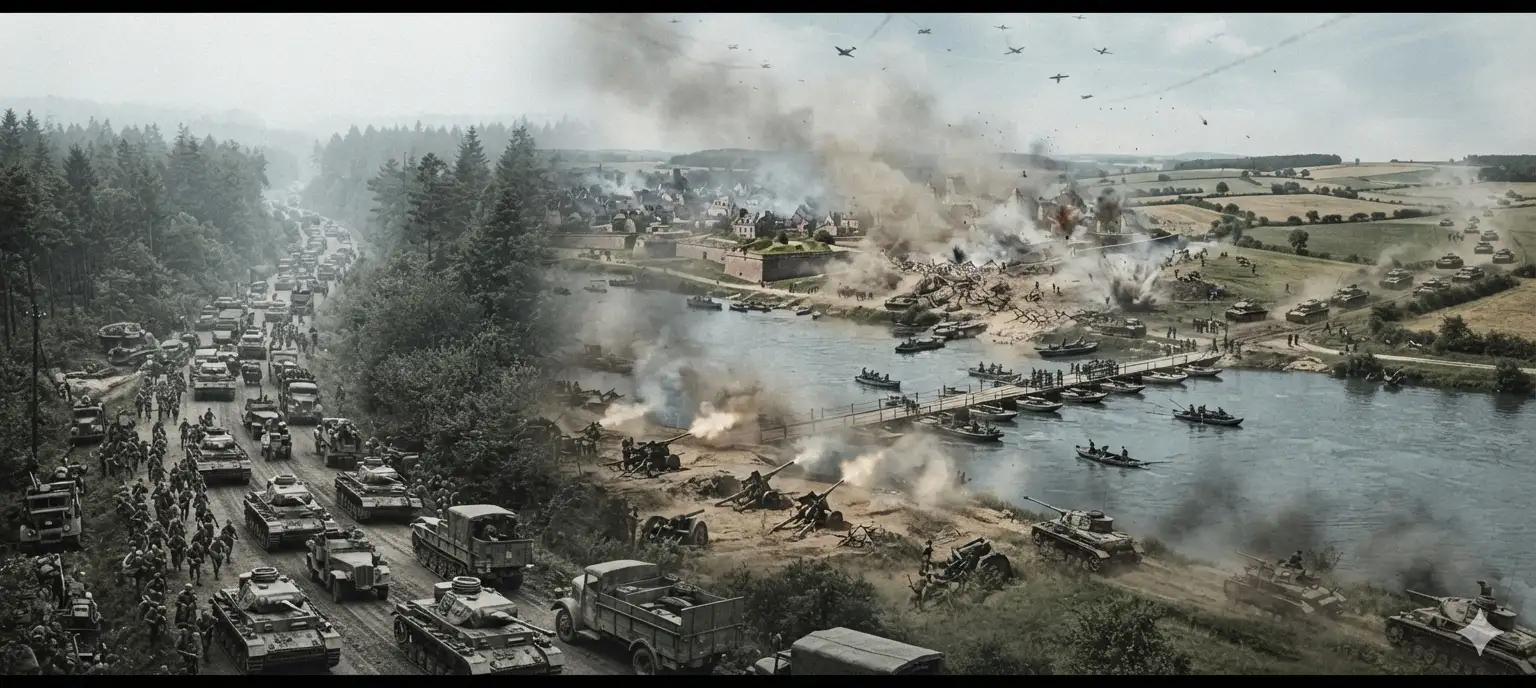
As fierce fighting raged across Belgium and the Netherlands, Germany's main armored columns pushed through the Ardennes with astonishing speed. Thousands of tanks, trucks, artillery pieces, and infantry crowded the narrow forest roads, creating traffic jams that stretched for miles. Had the Allies recognized the scale of this movement and launched determined air attacks, the offensive might have been delayed or even disrupted. Instead, the German advance continued with little interference.
By 13thMay, the leading German divisions reached the Meuse River near Sedan. After relentless bombardment by the Luftwaffe, assault troops crossed the river and established bridgeheads on the opposite bank. The French defenders, already shaken by the intense air attacks, were unable to hold their positions for long. Once the defenses around Sedan collapsed, German armored divisions poured through the gap and raced westward across open country. Moving far faster than the Allied commanders could react, they shattered the carefully prepared Allied defensive plan and opened the road deep into France.
Following the breakthrough at Sedan, the German panzer divisions advanced with astonishing speed. Instead of turning directly toward Paris, they raced west for the English Channel, aiming to trap the Allied armies that had moved into Belgium. The strategy worked perfectly. German armored spearheads bypassed isolated resistance, leaving slower infantry to deal with it later, while advancing so rapidly that Allied intelligence reports became outdated within hours. On 20 May 1940, German forces reached the Channel coast near Abbeville, cutting off the British Expeditionary Force, the Belgian Army, and several French armies in northern France.
The Allied position quickly deteriorated. French counterattacks failed to break the German corridor and British commanders realized that complete encirclement was becoming inevitable. Roads were soon choked with retreating soldiers, refugees, abandoned vehicles, and damaged equipment, while constant Luftwaffe attacks added to the confusion. Despite the growing chaos, Allied troops continued to resist fiercely, launching several local counterattacks that briefly slowed the German advance. However, these efforts were not enough to prevent one of the largest military encirclements in modern history.
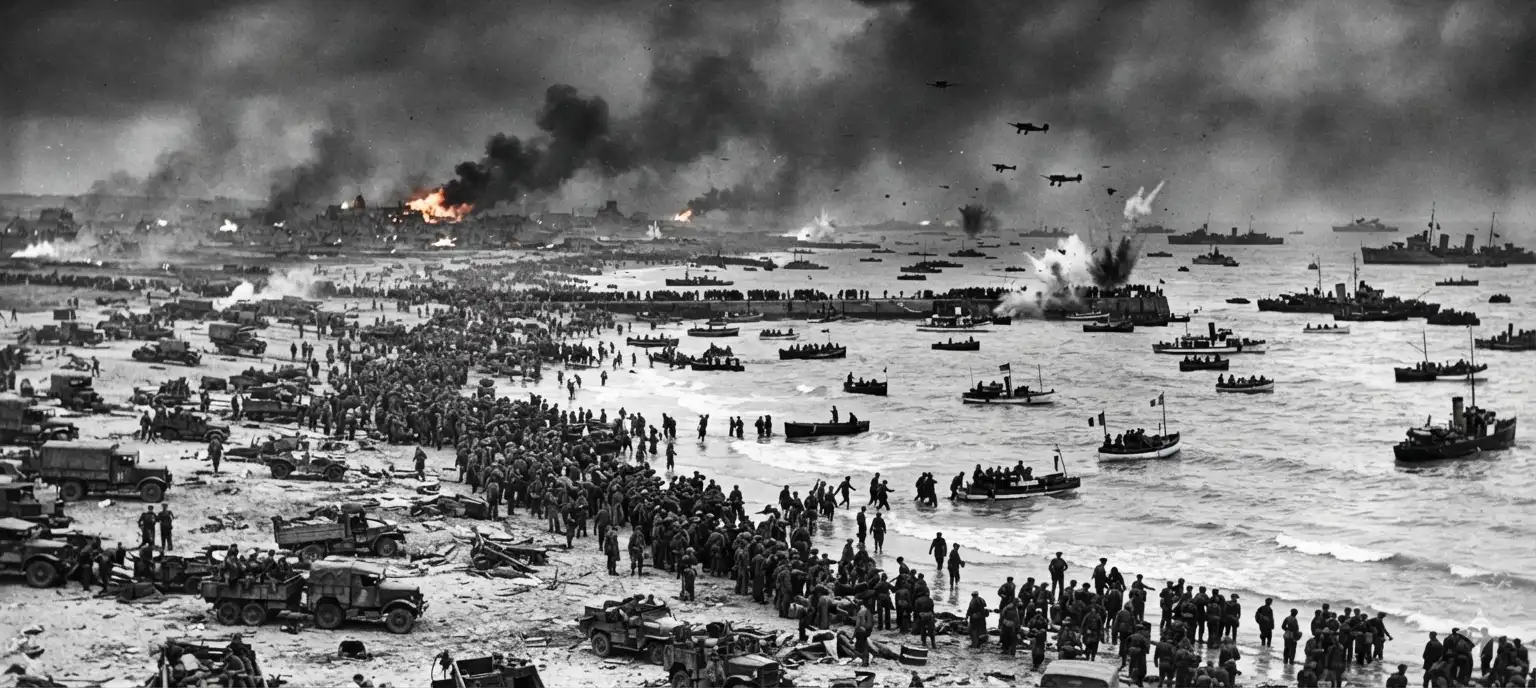
By late May 1940, the Allied armies had been driven back to the French port of Dunkirk, their last remaining escape route to Britain. Hundreds of thousands of British, French, and Belgian soldiers were now trapped in a rapidly shrinking pocket with the English Channel behind them and German forces closing in from every direction. Supplies of food, fuel, and ammunition were running low, while the Luftwaffe repeatedly bombed the roads, beaches, and military positions in an effort to prevent any evacuation. If these troops were captured, Britain would lose the core of its professional army, giving Germany an overwhelming advantage in Western Europe.
With victory seemingly within reach, the leading German panzer divisions advanced toward Dunkirk. Then, on 24 May, Adolf Hitler unexpectedly ordered them to halt. The decision surprised many German commanders, who believed the trapped Allied armies were only days away from complete destruction. Hitler's intention, however, was not to abandon the offensive. After weeks of relentless fighting, the armored divisions needed fuel, maintenance, and time to reorganize, while the slower infantry formations caught up with the rapidly advancing spearheads. Later that day, Hitler approved plans to resume the attack on 25 May. The pause was expected to be brief, after which the German Army would launch its final assault to destroy or capture the Allied forces gathered around Dunkirk.
Before dawn on 25 May 1940, the German offensive resumed with overwhelming force. Artillery batteries opened a heavy bombardment on the shrinking Allied perimeter around Dunkirk, targeting defensive positions, supply depots, road junctions, and troop concentrations. Soon afterward, waves of Luftwaffe aircraft struck the harbor, beaches, and dock facilities, setting fuel depots and warehouses ablaze. Under this cover, German panzer divisions and infantry renewed their advance from the south and east, steadily tightening the encirclement. The Allied commanders understood that every passing hour brought the enemy closer to the beaches, leaving little time to organize an evacuation.
Throughout 25 and 26 May, British and French forces launched a series of determined counterattacks to keep open the remaining routes into Dunkirk. Although some temporarily forced isolated German units back, they failed to halt the overall advance. German commanders avoided costly frontal assaults whenever possible, allowing their armored divisions to bypass stubborn resistance while infantry dealt with isolated pockets of defenders. Constant Luftwaffe attacks added to the chaos, with retreating soldiers, military vehicles, artillery, and refugees crowding every road leading to the coast. As German troops captured the high ground overlooking the final approaches to Dunkirk, the remaining escape routes came under artillery fire. By the evening of 26 May, the Allied pocket had shrunk dramatically, and many British soldiers found themselves fighting with the sea at their backs.
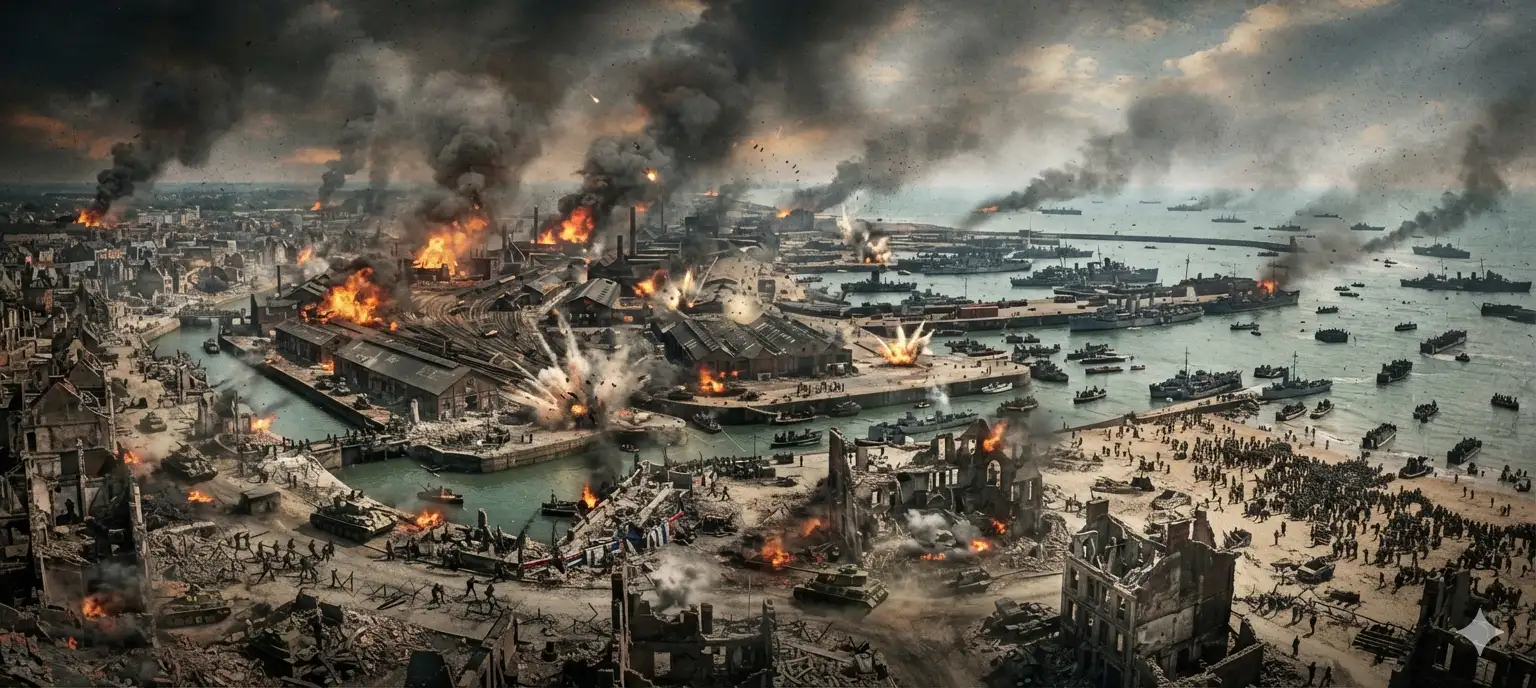
On 27 May 1940, German forces reached the outer defenses of Dunkirk, bringing the battle to the city's doorstep. Fierce fighting broke out around canals, railway yards, factories, and hastily prepared defensive positions manned by British and French troops. Meanwhile, the harbor remained crowded with ships desperately trying to evacuate soldiers across the English Channel. As German artillery moved within range, shells began crashing into the docks, damaging piers, destroying warehouses, and severely disrupting loading operations. At the same time, German infantry fought their way forward street by street while panzer divisions secured the outskirts of the city. Throughout the day, isolated Allied units launched desperate attempts to break through the encirclement, but most were forced back or surrounded. By nightfall, German troops controlled much of the southern and western approaches to Dunkirk, compressing the remaining Allied forces into an ever-shrinking strip of coastline.
The decisive assault came on 28 May. German forces launched coordinated attacks along the entire perimeter while the Luftwaffe relentlessly bombed the beaches, harbor, and evacuation points. Under the constant pressure, communications between Allied headquarters and frontline units began to break down, leaving many formations isolated. Thousands of exhausted soldiers reached the beaches hoping for rescue, only to discover that the available ships were far too few to evacuate everyone. As artillery shells landed among the waiting troops, discipline gradually gave way to confusion and despair. Ammunition was nearly exhausted, many battalions had been fighting continuously for days, and organized resistance steadily crumbled. By evening, large numbers of British and French soldiers laid down their arms, while others made desperate attempts to escape in fishing boats, lifeboats, and other improvised craft. Although a small number managed to reach Britain, the vast majority remained trapped as the Dunkirk pocket finally collapsed.
By 30 May 1940, the Battle of Dunkirk had come to a disastrous end for the Allies. German forces captured the harbor and secured the surrounding coastline, while tens of thousands of British and French soldiers were killed or wounded. Hundreds of thousands more were taken prisoner, effectively destroying the British Expeditionary Force as a fighting force. Along with its soldiers, Britain lost enormous quantities of tanks, artillery, trucks, ammunition, fuel, and other valuable military equipment. For Germany, the victory marked the complete destruction of the Allied armies trapped in northern France. For Britain, it was the greatest military defeat in its modern history. News of the catastrophe spread quickly across Britain, leaving the nation in shock.In Parliament, Prime Minister Winston Churchill faced intense criticism as members demanded answers for the collapse in France. Although a few politicians quietly suggested negotiating with Germany, Churchill firmly rejected the idea and insisted that Britain must continue the war.
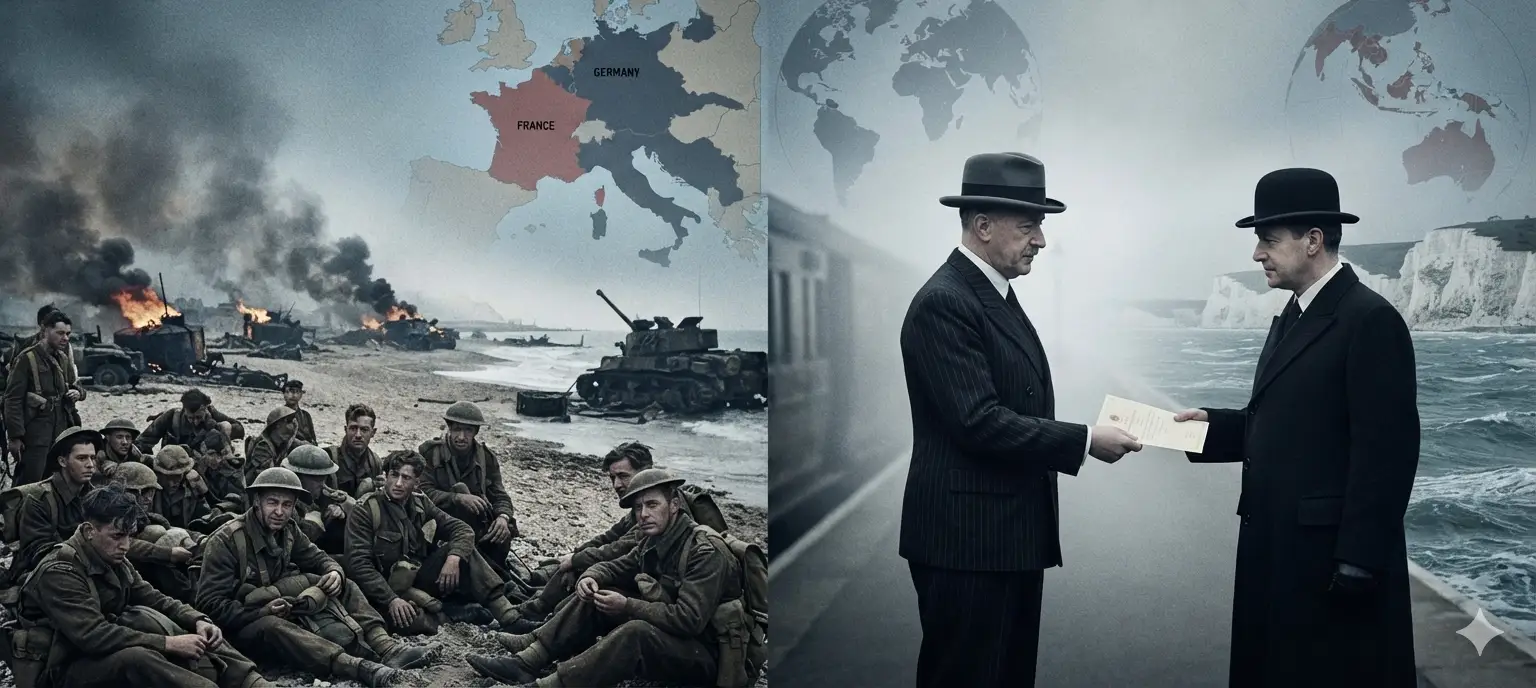
The destruction of the British Expeditionary Force at Dunkirk dramatically altered the balance of power in Europe. With France on the verge of collapse and the German Army victorious across Western Europe, Adolf Hitler believed he had achieved his principal military objective. Rather than risking a costly invasion across the English Channel, he preferred to end the war with Britain through negotiation. In early June 1940, German diplomats quietly conveyed a peace proposal to London. Germany pledged not to invade the British Isles and promised to respect the integrity of the British Empire, allowing Britain to retain its colonies, dominions, and overseas possessions. In return, Britain was expected to end the war, recognize Germany's dominance over continental Europe, and refrain from supporting any nation or movement hostile to Hitler. This included avoiding military alliances against Germany, refusing assistance to its enemies, and staying out of affairs that Berlin regarded as falling within its sphere of influence. To many contemporary observers, the offer appeared surprisingly moderate. Germany was asking Britain to accept the new political order in Europe while preserving its empire and avoiding a long and destructive conflict between the two nations.
Hitler's peace proposal reached London at one of the darkest moments in British history. The disaster at Dunkirk had destroyed Britain's professional army, France was on the verge of defeat, and many feared that Britain would soon have to face Germany alone. Within the government, opinions were deeply divided. Some senior ministers believed the offer deserved serious consideration, arguing that if Germany was willing to leave the British Empire intact, there was little to gain from continuing a seemingly hopeless war. Others warned that accepting such terms would leave Germany as the unchallenged master of Europe, reducing Britain to a powerless observer in continental affairs. Prime Minister Winston Churchill firmly opposed any negotiations. He argued that although Britain had suffered a severe military defeat, its greatest strengths remained intact—the Royal Navy still ruled the seas, the Royal Air Force was ready to defend the skies, and the British Empire continued to span the globe. Accepting peace, he insisted, would turn a temporary battlefield defeat into a permanent political surrender. Churchill's determination gradually won over the cabinet, and Britain rejected Hitler's offer, choosing to continue the war despite the immense challenges that lay ahead.
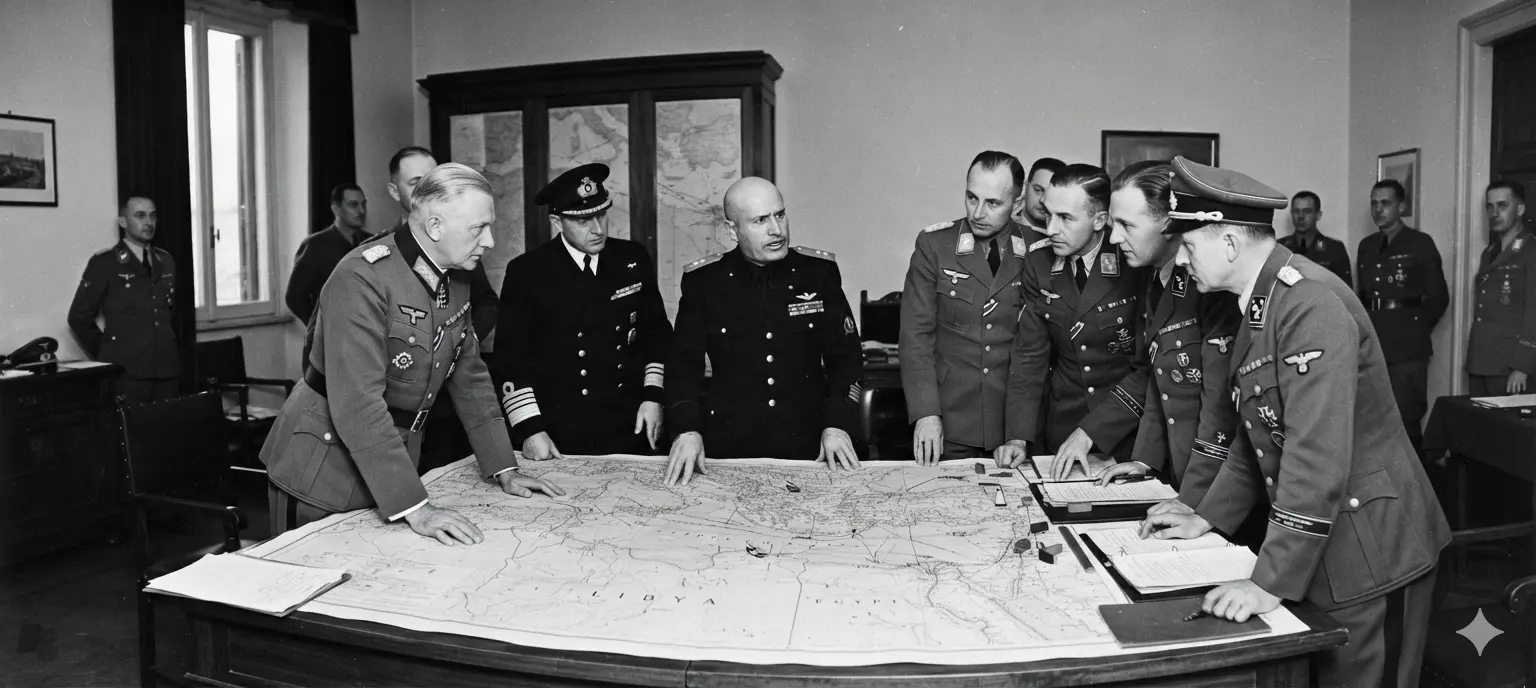 With Britain rejecting his peace proposal, Hitler began looking for other ways to weaken the British Empire. Instead of immediately preparing for a risky invasion across the English Channel, German attention increasingly shifted toward the Mediterranean, a region that offered far greater strategic opportunities. Military planners studied routes stretching from Gibraltar to the Suez Canal, while reports on North Africa, Malta, Egypt, and Britain's vital sea lanes became a regular feature on Hitler's desk. Rather than attacking Britain directly, Germany hoped to undermine its empire by threatening the communications and supply routes that connected London with its overseas possessions. The Mediterranean also offered another important advantage—Germany could operate alongside its ally, Italy, whose mainland territory and colonies already provided a strong foothold in the region.
During the second half of 1940, meetings between German and Italian military leaders became increasingly frequent. Benito Mussolini welcomed closer cooperation, believing that German military expertise, modern equipment, and industrial strength would greatly improve Italy's chances of success. Joint planning staffs were established to coordinate future operations, with naval officers examining shipping routes, army commanders studying desert warfare, and air force leaders planning how to gain control of the Mediterranean skies. Officially, these discussions were presented as defensive preparations, but both Berlin and Rome understood that they were laying the groundwork for a much larger campaign against British interests in the Mediterranean and North Africa.
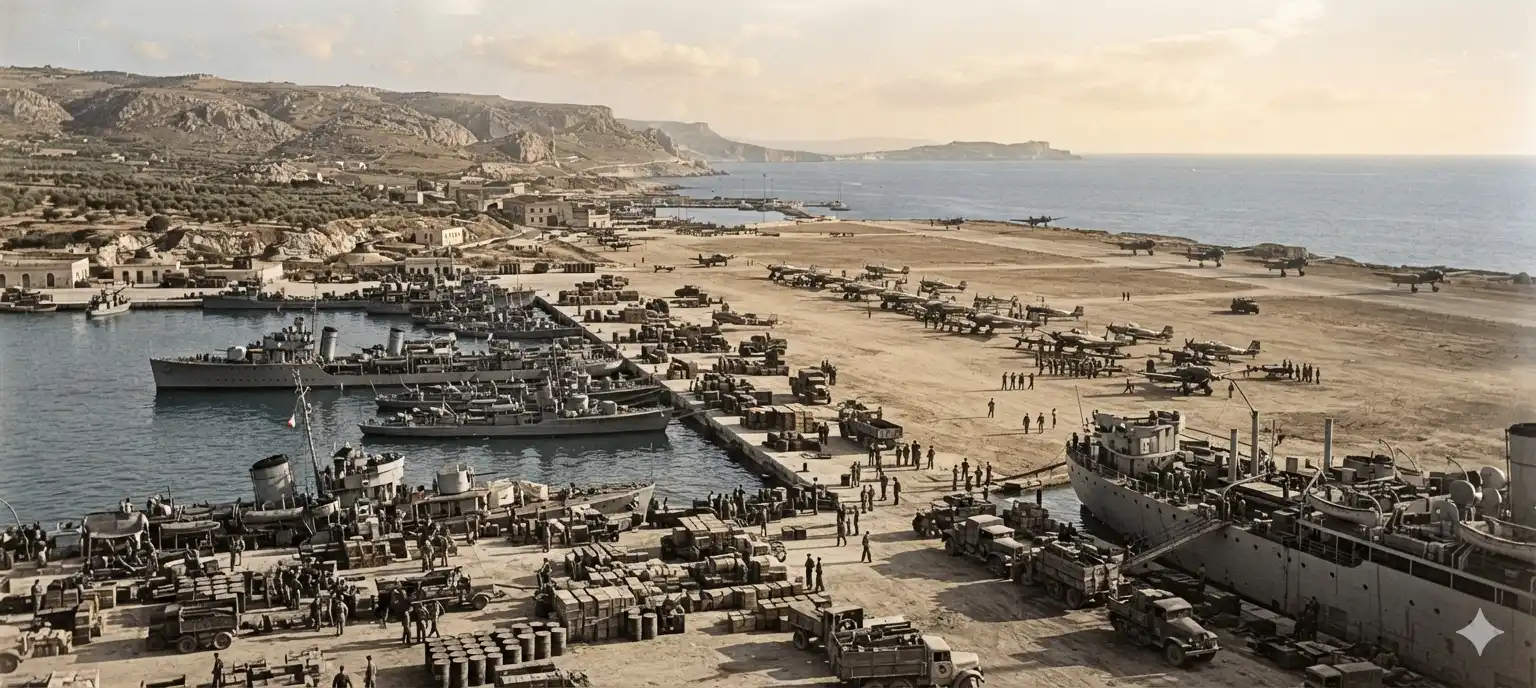
Hitler increasingly viewed the British Empire as a vast network held together by vital sea routes. At the center of this network stood Malta, whose location allowed British forces to threaten Axis supply convoys traveling between Italy and Libya. Determined to eliminate this obstacle, Germany and Italy began making extensive preparations for a major operation against the island. Sicily, the large Italian island lying just across the Strait of Messina from mainland Italy, was placed at the center of these preparations. German aircraft, troops, and logistics units steadily arrived to reinforce the Italian garrison. Military activity across the island increased noticeably as airfields were expanded, fuel depots and supply bases were constructed, and transport facilities strengthened to support sustained operations. German fighter and bomber squadrons were gradually deployed alongside elite airborne troops, while Italian ports worked around the clock preparing warships, transport vessels, and escorts for the coming campaign.
As German and Italian preparations in Sicily gathered pace, British intelligence began detecting unusual military activity. Reports from agents, reconnaissance flights, and intercepted communications all pointed to a growing concentration of troops, aircraft, and supplies on the island. Several intelligence assessments warned that Malta could soon become the target of a major Axis offensive. However, these reports failed to generate any real sense of urgency in London. British leaders remained focused on defending the homeland and monitoring developments in Western Europe, believing Germany was unlikely to divert significant forces to the Mediterranean so soon. Consequently, Malta received few additional reinforcements, and its existing garrison was expected to cope with any future attack. By underestimating the scale of the Axis preparations, Britain unknowingly allowed Germany and Italy to complete their plans with little interference.
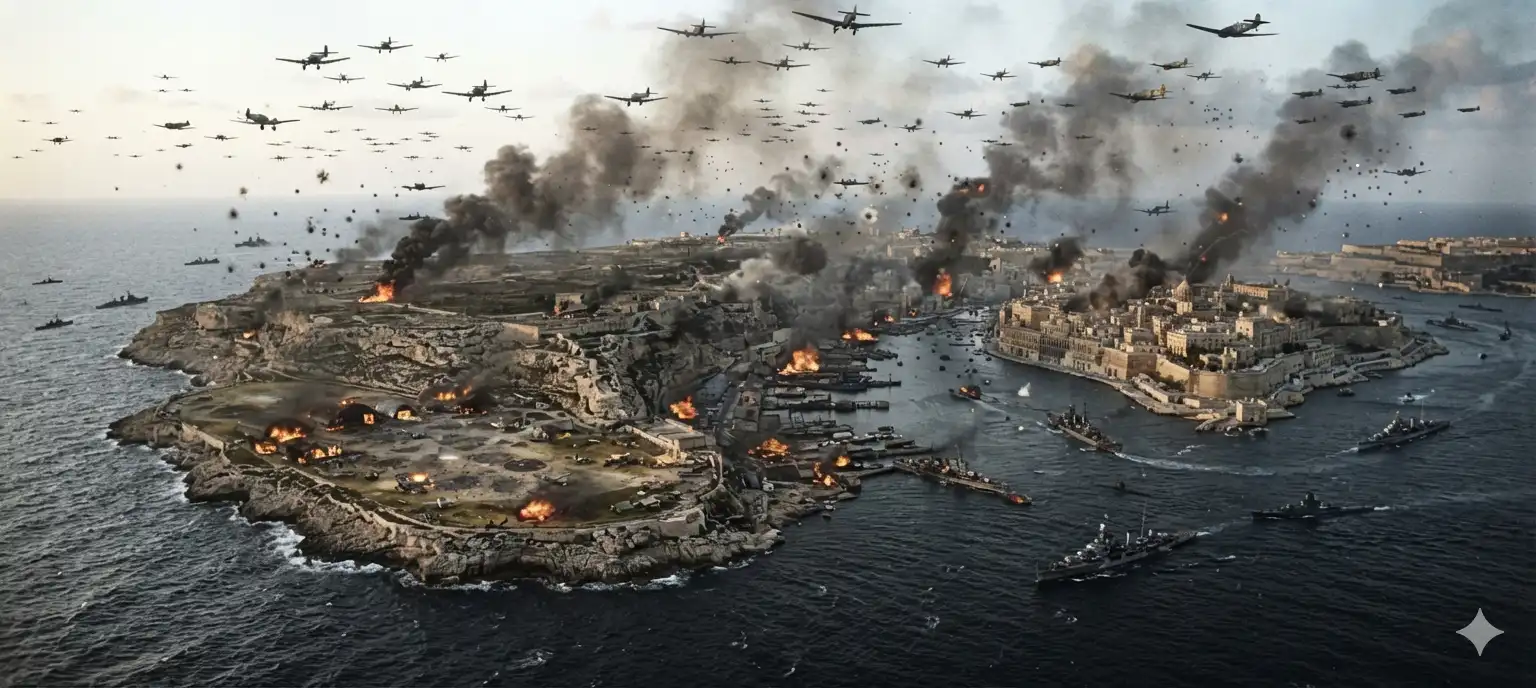
In early autumn 1940, Germany and Italy launched Operation Nile, the opening phase of their campaign to seize Malta and secure control of the central Mediterranean. Before dawn, large formations of German and Italian bombers took off from airfields across Sicily and southern Italy, escorted by fighter aircraft. Their mission was to cripple Malta's defenses by striking its airfields, radar stations, ports, fuel depots, and command centers. The attacks were carefully coordinated, with the objective of overwhelming the island's defenders before they could organize an effective response. Within hours, Malta's runways were heavily damaged, fuel storage facilities were ablaze, and many British aircraft were destroyed on the ground. Although the Royal Air Force fought back with determination, it was hopelessly outnumbered and struggled to cope with the relentless waves of Axis aircraft. Over the following days, the bombing intensified as repaired airfields were attacked again and supply routes to the island came under constant air patrols. Gradually, Malta's air defense system collapsed, leaving only a handful of scattered aircraft still capable of flying. German commanders concluded that air superiority over the central Mediterranean had been achieved far sooner than expected. With the skies firmly under Axis control, the island now stood exposed to the next stage of the campaign as airborne and naval forces prepared to launch the invasion.
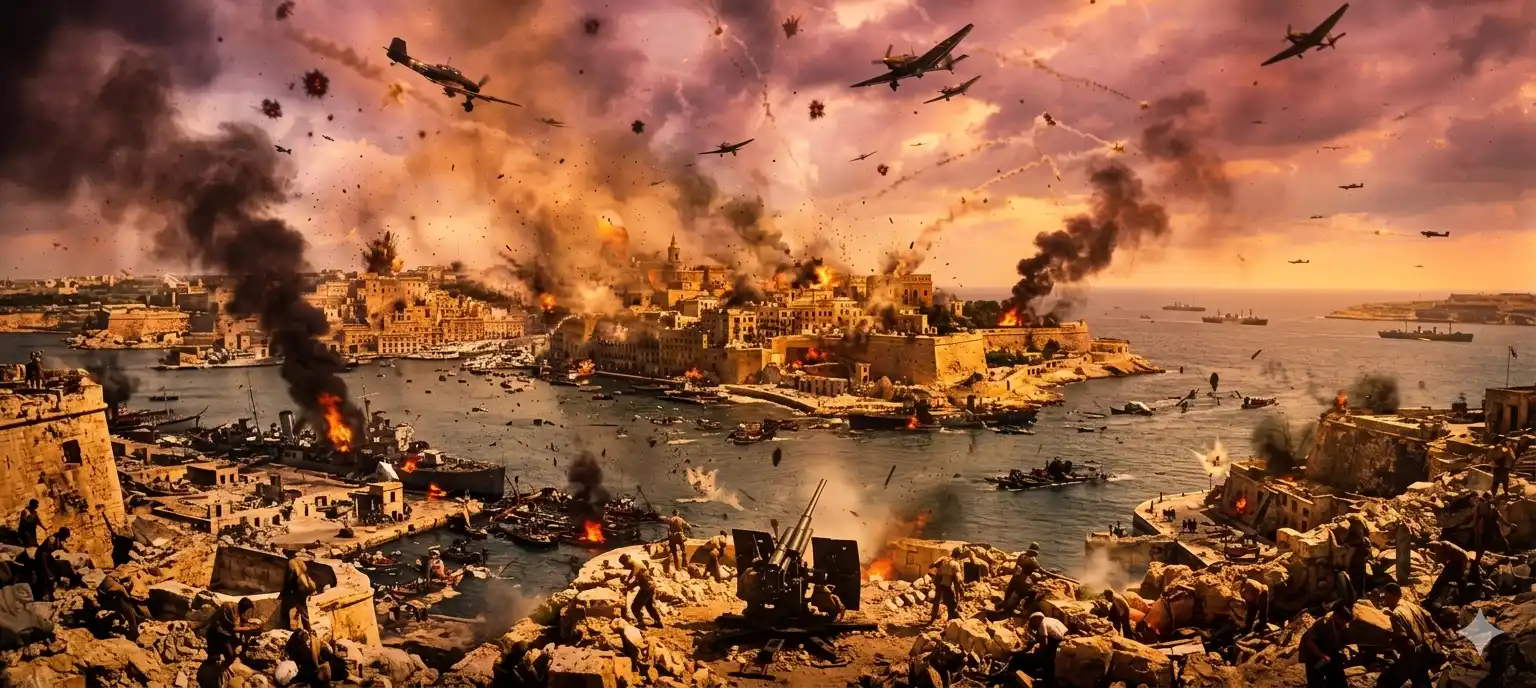
With Malta's air defenses shattered, German and Italian forces moved to isolate the island completely. Axis fighters and bombers dominated the skies while submarines, destroyers, and fast attack boats hunted British convoys attempting to reach Malta. Minefields further restricted the sea routes, and within weeks, regular British supply lines had been effectively severed. The Royal Navy, already stretched across several theaters, could not challenge the growing Axis presence without risking heavy losses elsewhere. Repeated attempts to reinforce or resupply the island met fierce resistance, leaving Malta increasingly cut off from the outside world. The Axis then intensified attacks on its harbors, artillery positions, communication centers, and ammunition depots. British defenders continued to resist, but fuel and ammunition steadily dwindled while damaged infrastructure became harder to repair. Meanwhile, Axis supply routes to North Africa became increasingly secure. Malta, once Britain's key strategic base in the central Mediterranean, was now an isolated fortress fighting for survival.
Once Malta had been effectively isolated, German commanders ordered the final phase of Operation Nile to begin. Troops, transport ships, and landing craft assembled in Sicily under the protection of overwhelming Axis air power, while elite German airborne units prepared to seize key airfields and communication centers before the main landings. As the invasion fleet crossed the Mediterranean, British coastal batteries opened heavy fire, destroying several landing craft and delaying the first assault waves. Even so, continuous German and Italian air attacks prevented the defenders from concentrating their fire or coordinating an effective response. Airborne troops disrupted British communications, allowing infantry landing on the beaches to establish secure footholds despite fierce resistance. Although British soldiers fought stubbornly from fortified positions, they were gradually overwhelmed by constant reinforcements arriving from Sicily while their own ammunition and supplies were getting exhausted. One defensive position after another fell as units became isolated or exhausted their ammunition. By the end of the battle, the remaining British resistance had collapsed, and Malta passed into Axis hands. The capture of the island secured the central Mediterranean, safeguarded supply routes to North Africa, and marked a major strategic victory for Germany and Italy.
With Malta captured and Libya firmly secured as an Axis base, Hitler ordered the next stage of his Mediterranean strategy—the invasion of Egypt. Command of the offensive was entrusted to General Erwin Rommel, whose mission was to drive east across the Western Desert and ultimately seize the Suez Canal. Axis armored divisions, motorized infantry, and reconnaissance units advanced from Libya in well-coordinated columns, supported by aircraft operating from newly secured bases. As the offensive gathered momentum, supply depots were established across the desert to sustain the rapid advance. Anticipating the attack, British forces prepared defensive positions along the approaches to Egypt, hoping to delay the Axis before they could threaten the Nile Valley. The first major clash took place near the Egyptian frontier, where British armor and infantry attempted to block the advance. Although they fought stubbornly, Rommel's highly mobile tactics—combining swift flanking maneuvers, concentrated armored assaults, and close air support—gradually broke through the British defenses. Disrupted communications and mounting supply problems further weakened the Allied position, forcing a steady withdrawal toward the fortified port of Tobruk. By the end of the battle, the Axis had broken through the Western Desert defenses and reached the outskirts of Tobruk, setting the stage for the next decisive phase of the North African campaign.
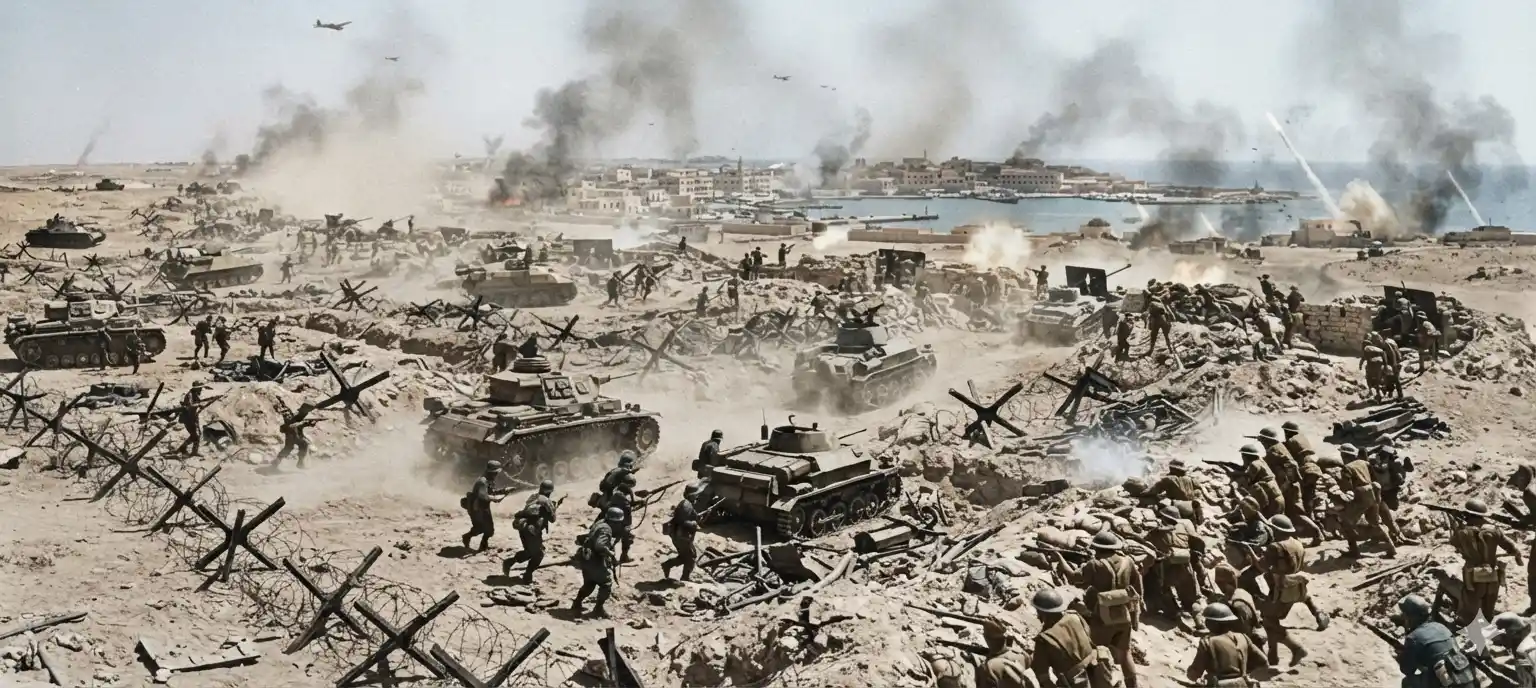
As Axis forces reached Tobruk, Erwin Rommel encountered one of the strongest British defensive positions in North Africa. Protected by fortified defenses, minefields, anti-tank obstacles, and coastal artillery, the port was also sustained by limited supplies arriving by sea. Rather than launching a costly frontal assault, Rommel chose to isolate the city. Axis forces surrounded Tobruk, cutting its land routes while aircraft and artillery relentlessly targeted supply depots, fuel stores, communication centers, and defensive positions. Instead of attacking along the entire perimeter, Rommel repeatedly struck selected weak points, forcing the British to shift their reserves from one sector to another and preventing them from establishing a stable defense. As weeks passed, shortages of ammunition, fuel, and water steadily weakened the garrison. Once the defenders had been sufficiently exhausted, Rommel launched a coordinated assault from multiple directions. Armored units broke through the most vulnerable sectors while infantry rapidly exploited the gaps, fragmenting the remaining British resistance. Tobruk eventually fell after a prolonged siege, providing the Axis with a vital coastal port and a powerful logistical base for the continued advance toward Egypt and the Suez Canal.
As the Axis offensive pushed steadily toward Egypt, Britain realized that defeating the Germans in the desert alone would be extremely difficult. Instead, London adopted a broader strategy aimed at forcing Germany to divide its attention. The Royal Air Force increased bombing raids against industrial cities and ports in northern Germany, targeting factories, docks, and transport infrastructure. At the same time, the Royal Navy stepped up its presence along the coast of occupied France, conducting patrols and movements that suggested preparations for a possible invasion of Western Europe. Although no landing was actually planned, these operations compelled Germany to reinforce its coastal defenses and strengthen air defenses over the Reich. While the strategy failed to stop the Axis advance in North Africa, it succeeded in forcing Hitler to spread his military resources across multiple fronts instead of concentrating everything on Egypt.
Hitler responded by ordering the Luftwaffe to intensify attacks on Britain's military infrastructure. German aircraft concentrated on RAF airfields, radar stations, naval bases, and aircraft factories, gradually increasing pressure on Britain's air defenses. Operating from bases in occupied France, the Luftwaffe also launched attacks against British shipping and naval patrols in the English Channel, making it increasingly difficult for the Royal Navy to operate close to the European coast. As the air campaign intensified, Britain's military resources became dangerously overstretched. Prime Minister Winston Churchill appealed to U.S. President Franklin D. Roosevelt for greater assistance, hoping for direct American military support in North Africa. Although Roosevelt continued supplying Britain with weapons and equipment, the United States remained officially neutral and refused to send troops. Britain was therefore left to confront the growing Axis challenge largely on its own, balancing the defense of the British Isles with the desperate struggle for Egypt and the Mediterranean.
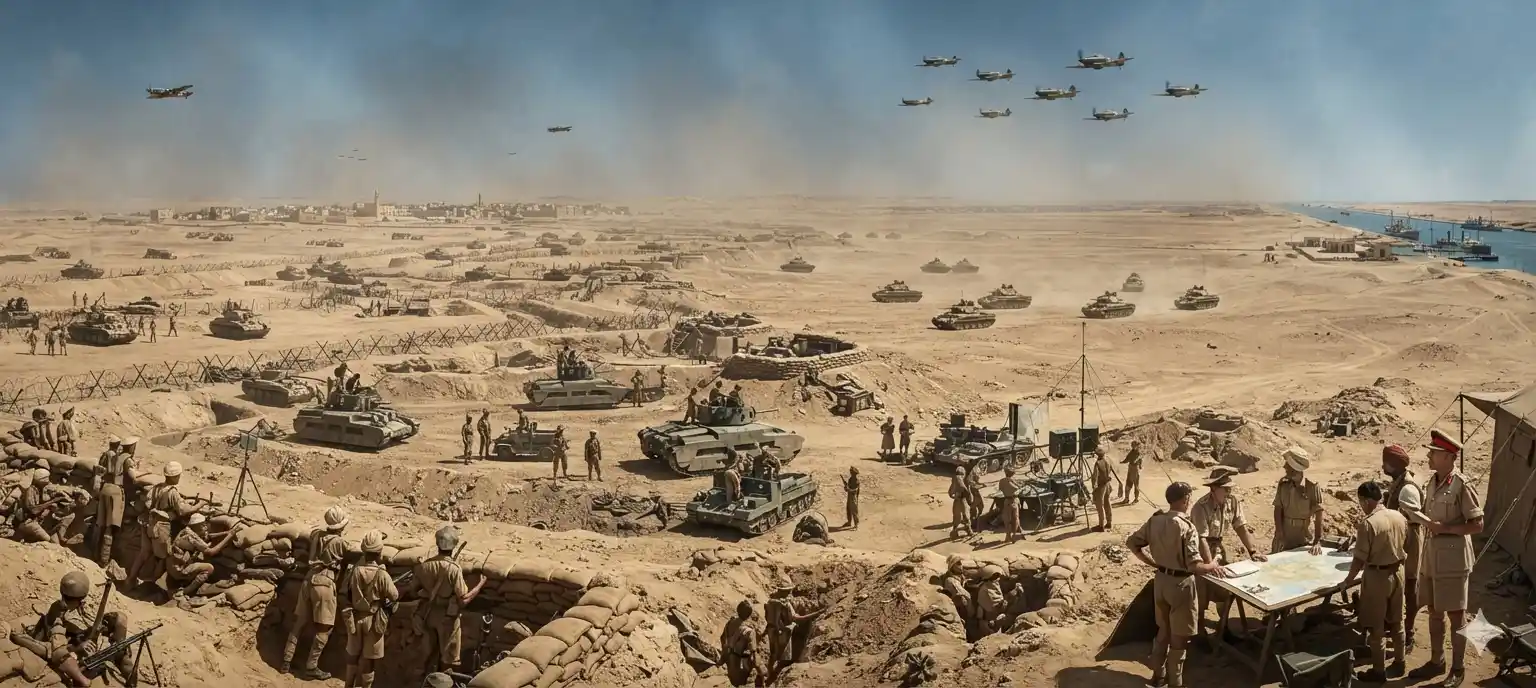
As the Axis advance moved steadily across North Africa, Britain concentrated its defenses around Egypt and the Suez Canal, recognizing that its loss would sever the most important link between Britain and its eastern empire. Troops from across the British Empire, including formations from Africa and Asia, were gradually redeployed to Egypt, transforming the region into the centerpiece of Britain's Mediterranean strategy. Command of the defense was entrusted to General Claude Auchinleck, an experienced officer familiar with warfare in the Middle East. Rather than waiting for the Axis to reach the Suez Canal itself, Auchinleck decided to confront them farther west around Alexandria. He organized layered defensive positions using British, Commonwealth, and colonial troops, supported by armored reserves and forward reconnaissance units spread across the desert. The Royal Air Force in Egypt was also reorganized to strike advancing Axis supply columns, hoping to slow their momentum before they could threaten Alexandria and the vital canal beyond.
After securing Tobruk, Erwin Rommel continued his rapid advance toward Alexandria. Well-supplied from newly established depots in Libya, Axis armored columns maintained their momentum across the desert while reconnaissance units reported that the British had concentrated their main defenses around Alexandria rather than the Suez Canal itself. The open desert west of the city now became the decisive battlefield, where mobility, logistics, and air power would determine the fate of Egypt. Both sides prepared for what promised to be the largest battle of the North African campaign.
Before launching a direct assault, Rommel ordered a systematic campaign to isolate Alexandria. German aircraft repeatedly bombed railway lines, roads, and supply depots connecting the city to Cairo and the Nile Delta, slowing the arrival of reinforcements and ammunition. The port of Alexandria also came under relentless attack, with docks, fuel tanks, warehouses, and harbor facilities suffering heavy damage. Axis aircraft further targeted British supply convoys moving through the desert, forcing them to travel in smaller and less efficient formations. Within weeks, Alexandria remained heavily defended but increasingly isolated, its ability to sustain a prolonged battle steadily weakening.
As the Axis tightened its grip around Alexandria, the city entered a prolonged siege. Constant air raids and disrupted supply routes created severe shortages of ammunition, fuel, food, and medical supplies. Despite these hardships, General Claude Auchinleck refused to abandon the city, reorganizing his forces into layered defensive sectors around the harbor, command centers, and key strongpoints. British and Commonwealth troops continued to resist fiercely, knowing that the fall of Alexandria would leave the road to the Nile Delta and the Suez Canal dangerously exposed. What followed was no longer a war of rapid maneuver but a brutal contest of endurance, with both sides relying on their logistics and determination to decide the fate of Egypt.
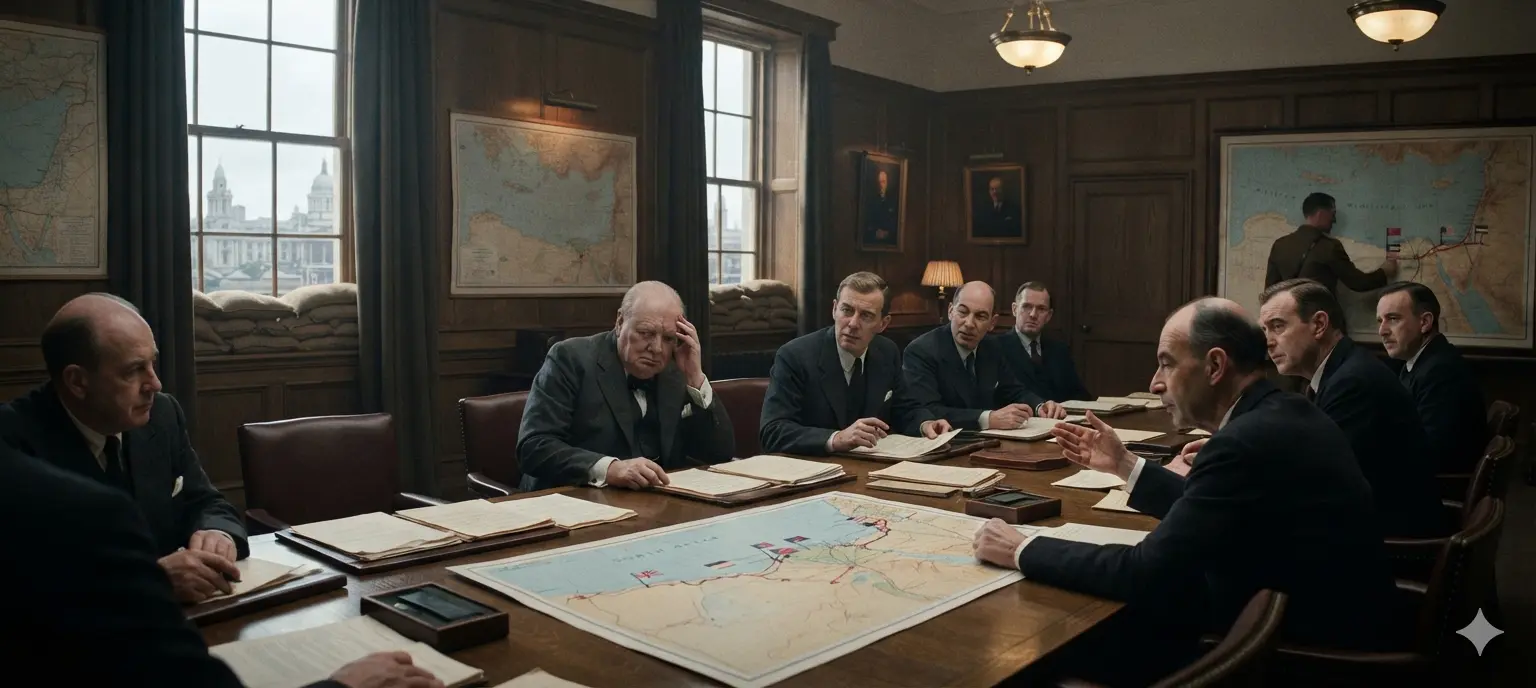
As the siege of Alexandria tightened and reports of worsening shortages reached London, Adolf Hitler presented Britain with a second peace proposal. Unlike the first, this offer arrived at a moment when Britain's strategic position had deteriorated dramatically, triggering a deep political crisis. Heated debates erupted within Parliament and the War Cabinet. Many ministers argued that with Egypt on the verge of collapse and Britain's imperial lifeline under grave threat, continuing the war could lead to even greater disaster. Winston Churchill strongly opposed negotiations, insisting that accepting peace under military pressure would destroy Britain's standing as a global power. Even so, confidence in his leadership began to weaken as the situation in North Africa worsened. Before any decision could be reached, Erwin Rommel launched a final coordinated assault on Alexandria. Supported by relentless air attacks, German armored and infantry units broke through the exhausted British defenses. Short of ammunition, food, and medical supplies, British and Commonwealth troops were gradually overwhelmed, and Alexandria finally fell into Axis hands. The loss of Egypt's principal defensive stronghold sent shockwaves through Britain. Churchill soon resigned as Prime Minister, and the new government, faced with a rapidly collapsing strategic position, decided to open negotiations with Germany. A diplomatic mission was dispatched to Berlin to explore comprehensive peace terms, marking a dramatic turning point in the war.
Following the fall of Alexandria, Britain found itself in its weakest strategic position since the war had begun. The new government concluded that continuing the conflict risked not only the loss of Egypt but also the eventual collapse of the British Empire's global communication network. Diplomatic representatives were therefore sent to Berlin, where weeks of negotiations between British and German officials resulted in a comprehensive peace settlement known as the Berlin Peace Agreement of 1941. The treaty formally ended hostilities between the two powers and established a new political and economic order in Europe and the Mediterranean. While Germany secured recognition of its dominance over continental Europe, Britain succeeded in preserving the integrity of its empire and avoiding a direct invasion of the British Isles. The principal terms of the agreement were as follows:
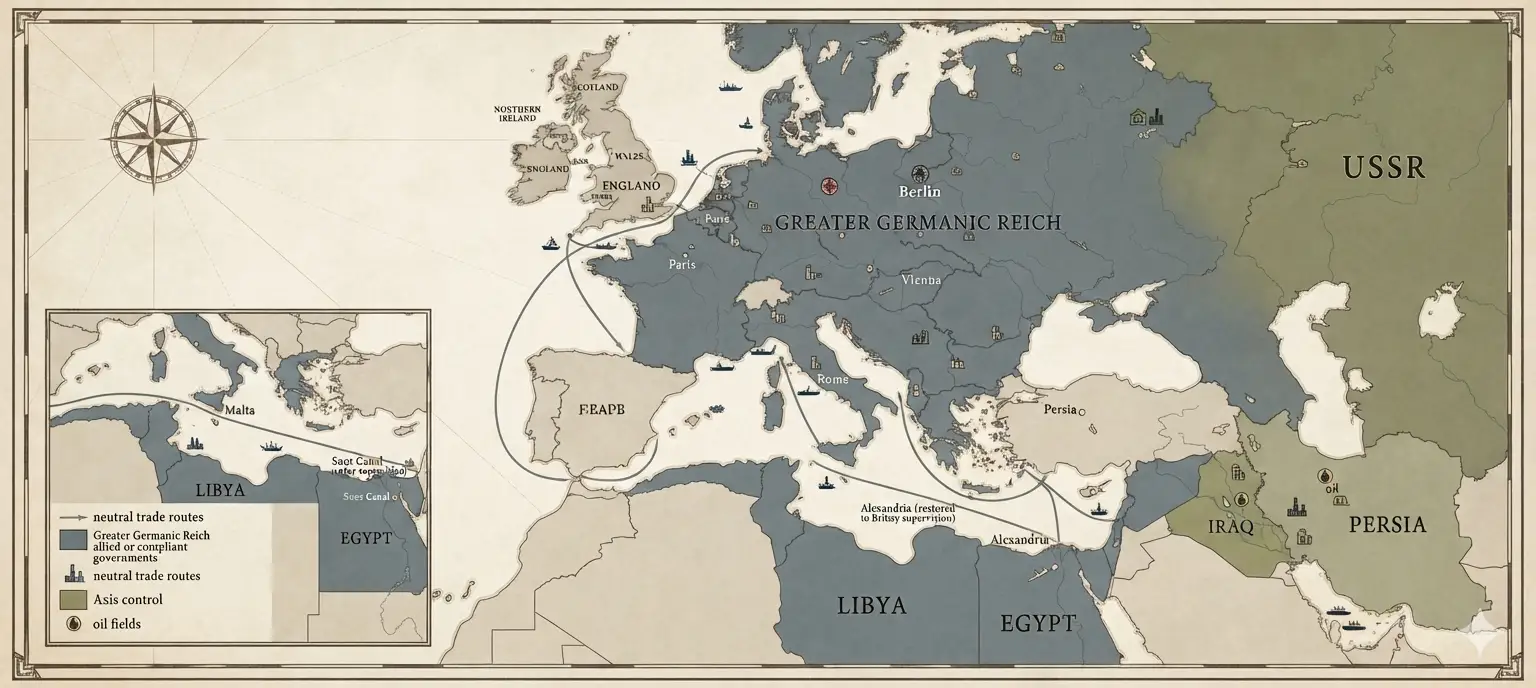
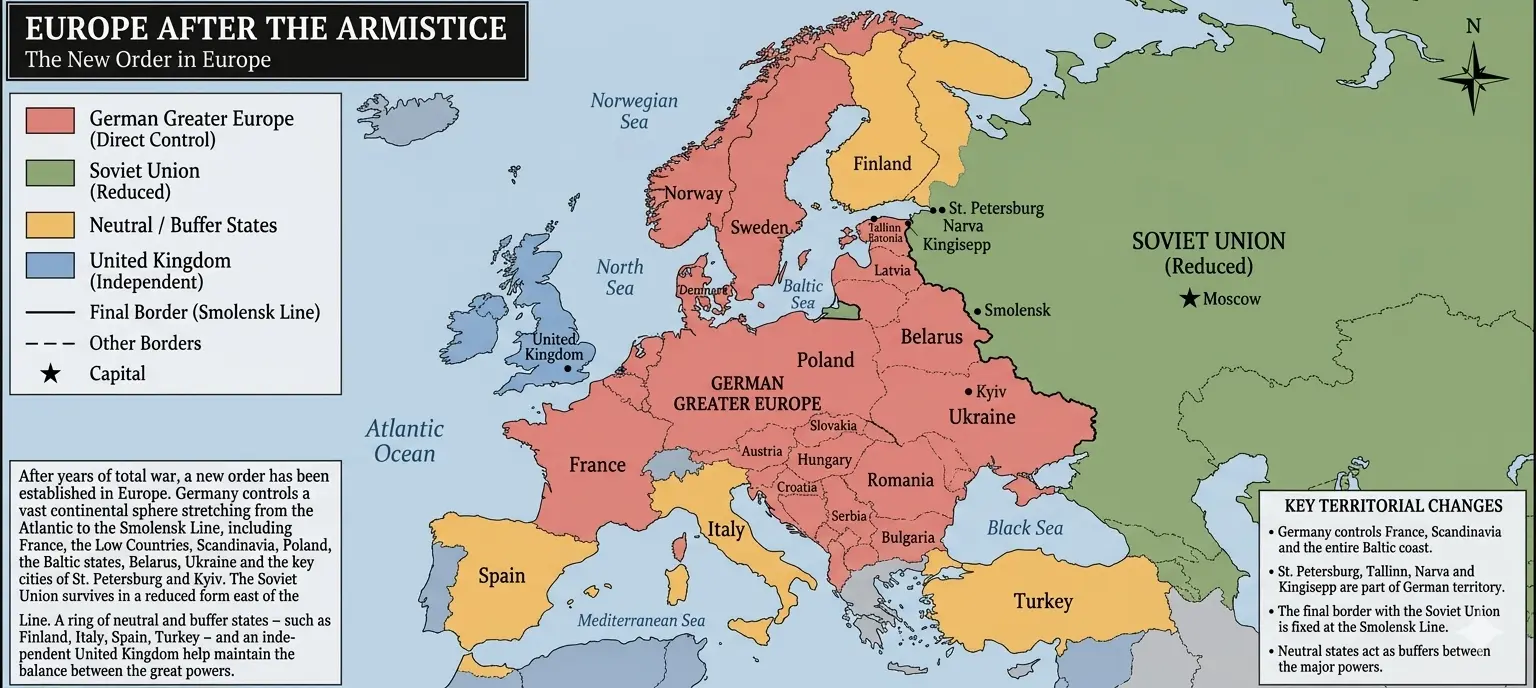
With the signing of the Berlin Peace Agreement, Britain's participation in the war officially came to an end. Although the British Empire remained politically intact, its role in world affairs changed dramatically. Britain retained control over its colonies and dominions but agreed to remain neutral and entered into a long-term economic partnership with Germany. In return, Germany guaranteed the security of the British Isles, restored Alexandria to British administration, and pledged not to interfere in Britain's internal or colonial affairs. For Adolf Hitler, the treaty represented an extraordinary strategic triumph. Germany now stood as the undisputed master of continental Europe, with friendly or compliant governments stretching across much of the continent. In the Mediterranean, Axis control over Malta, Libya, and Egypt provided unmatched strategic depth, while the Suez Canal operated under treaty supervision, ensuring uninterrupted global trade. Even more significant was Germany's guaranteed access to Middle Eastern oil and vital raw materials from the British Empire through structured trade agreements rather than costly colonial conquest. Britain preserved its empire but withdrew from great-power rivalry, leaving Germany as the dominant military and economic power in Europe. The Berlin Agreement therefore created a new international order—one in which German influence extended from the Atlantic coast to the eastern frontiers of Europe, supported not only by military victories but also by an economic system that secured the resources needed to sustain its supremacy for years to come.
Britain's withdrawal from the war and the signing of the Berlin Peace Agreement sent shockwaves through the United States. With Britain no longer opposing Germany, Washington recognized that the balance of power in Europe had shifted decisively in Hitler's favor. The Roosevelt administration ordered a major strategic review, accelerating naval expansion and increasing intelligence operations to closely monitor German activities across Europe and the Mediterranean. At the same time, American leaders grew concerned that Germany now enjoyed secure access to Middle Eastern oil and other vital resources through its economic partnership with the British Empire, strengthening its long-term industrial and military potential. Public opinion, however, remained divided. Isolationists argued that the United States should avoid becoming involved in European affairs, while others warned that a German-dominated Europe could eventually challenge American influence around the world. Although no direct military action was taken, Washington quietly began preparing for a future in which Germany had emerged as the world's most powerful continental empire.
Following Britain's withdrawal from the war, Germany launched a diplomatic campaign to calm growing concerns in Washington. Berlin stressed that the conflict had ended through negotiation rather than total conquest, pointing out that Britain remained independent and its empire had been preserved under the Berlin Agreement. German leaders argued that Europe had entered a new era of stability, with international trade routes, the Suez Canal, and colonial resource networks operating under peaceful treaty arrangements instead of constant warfare. They also assured the United States that Germany had no intention of expanding the war across the Atlantic or challenging American interests in the Western Hemisphere. By portraying the new European order as stable and Britain as a respected treaty partner rather than a defeated nation, Hitler hoped to convince Washington that there was no reason for American military intervention. The strategy aimed to keep the United States on the sidelines while Germany consolidated its dominance over Europe and the Mediterranean.
With Britain out of the war and the Mediterranean securely under Axis control, Hitler turned his attention to Northern Europe. Although Sweden had remained neutral throughout the conflict, Berlin now regarded its independence as a strategic weakness. Sweden's ports, railways, iron ore reserves, and industries could play a vital role in supporting Germany's future military ambitions, particularly any campaign against the Soviet Union. Determined to secure these advantages before circumstances changed, Hitler ordered preparations for an invasion. To preserve the element of surprise, Germany launched a carefully planned deception campaign. Diplomatic talks with Stockholm continued as if relations remained normal, while behind the scenes German troops quietly assembled in occupied Denmark and northern Germany. Merchant ships secretly carried tanks, vehicles, and supplies across the Baltic, Luftwaffe squadrons moved to forward airfields, and military radio communications were deliberately disguised to hide the scale of the buildup. By the time Swedish leaders realized that Germany's intentions extended far beyond diplomacy, the invasion force was already in position.
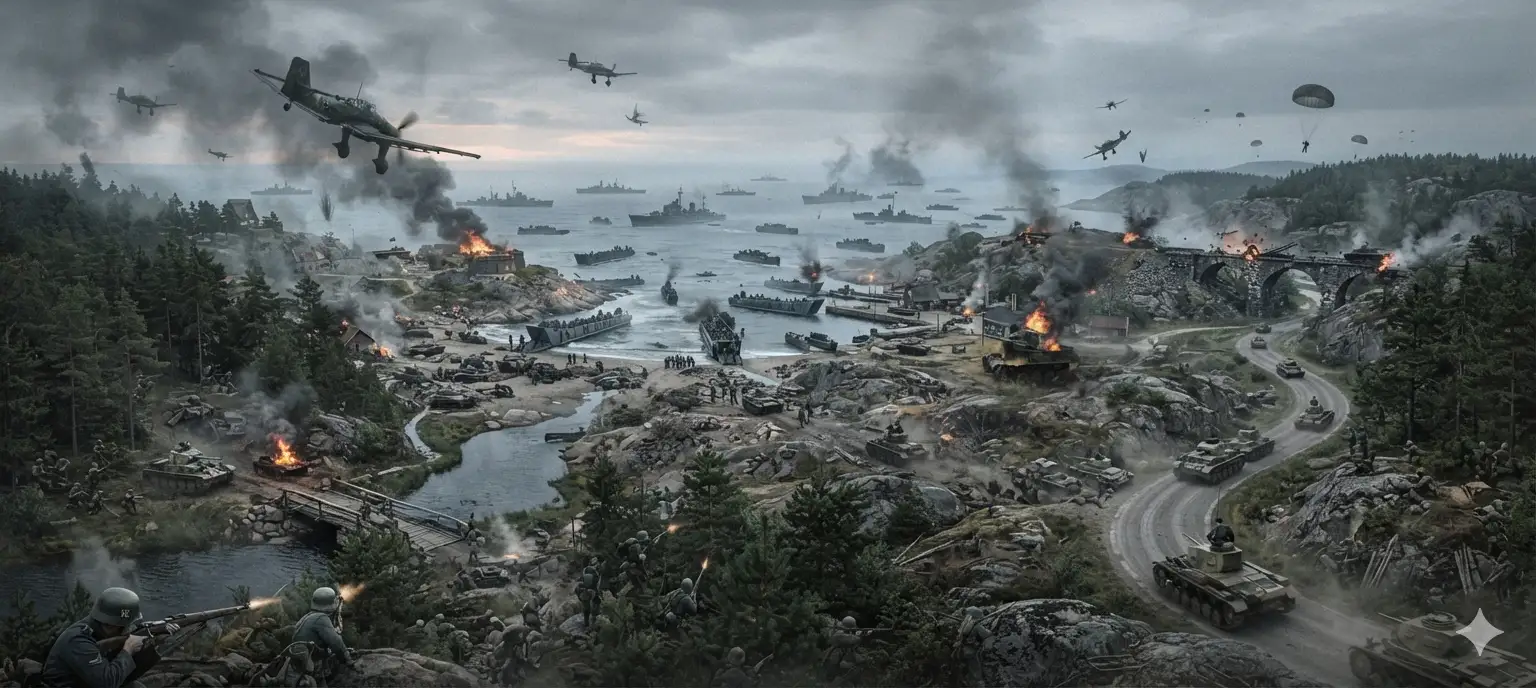
Before dawn, German aircraft swept across the Baltic Sea, launching precision strikes against Swedish airfields, radar stations, communication centers, and major railway junctions. The goal was to cripple Sweden's ability to coordinate a national defense rather than destroy its cities. Within hours, runways were shattered, fuel depots burned, and military communications were thrown into confusion as the Luftwaffe established control of the skies. At the same time, German naval task forces escorted troop transports to Sweden's southern ports, where amphibious forces seized harbors and beaches while airborne troops captured key bridges and transport hubs before they could be demolished. With secure beachheads established, German armored columns advanced rapidly into the interior, bypassing isolated pockets of resistance and racing toward strategic towns and road junctions. Swedish forces fought determined delaying actions in forests and along rivers, destroying bridges and using natural obstacles to slow the invasion. Yet constant Luftwaffe attacks disrupted troop movements, while German engineers quickly restored damaged crossings, allowing the offensive to maintain its momentum and preventing Sweden from establishing a continuous defensive line.
As German forces pushed deeper into Sweden, the fighting centered on the country's key railways and highways linking its industrial heartland with the capital. Luftwaffe bombers targeted rail yards, military depots, and transport hubs, isolating Swedish units from one another while mechanized columns advanced along multiple routes. Swedish divisions fought stubbornly, launching several counterattacks that briefly slowed the German offensive and inflicted local losses. However, Germany's superior mobility, constant air support, and steady flow of reinforcements gradually forced the defenders to retreat. By the end of the second week, Germany controlled the nation's major transport network, allowing troops and supplies to move freely across occupied territory. With communications shattered, reserve mobilization disrupted, and many garrisons cut off, Sweden's organized resistance began to collapse. German forces entered the country's principal administrative centers, secured ports, government buildings, and industrial facilities, while the remaining Swedish units either withdrew into remote regions or surrendered after losing contact with higher command.
Within a few weeks, organized Swedish resistance had largely come to an end. German military authorities quickly established control across the country, taking charge of ports, railways, heavy industries, and communication networks. While some Swedish officials remained in office to handle everyday administration, real authority rested with German occupation commanders. The conquest of Sweden completed Germany's domination of Northern Europe, giving Berlin full control over the Baltic approaches while adding valuable industries, naval facilities, and strategic bases to the Reich. Combined with its earlier victories across continental Europe and the Mediterranean, the occupation further strengthened Germany's position and provided an ideal launching point for future military operations.
With Britain out of the war, Hitler turned his attention to strengthening Germany's position in southeastern Europe. After months of quiet negotiations, Turkey agreed to join the Axis in exchange for military cooperation, economic benefits, and a greater role in shaping the region's future. The announcement marked a major diplomatic success for Berlin, extending Axis influence to the eastern Mediterranean and the Black Sea. German military advisers soon arrived in Turkey to modernize its armed forces, improve railways, airfields, and communications, and coordinate future military planning. The decision attracted worldwide attention, as Turkey's strategic location gave the Axis greater control over the crossroads between Europe and Asia. By bringing Turkey into the alliance, Germany further strengthened its political and military position, creating a more connected Axis bloc and laying the groundwork for future operations in Eastern Europe.
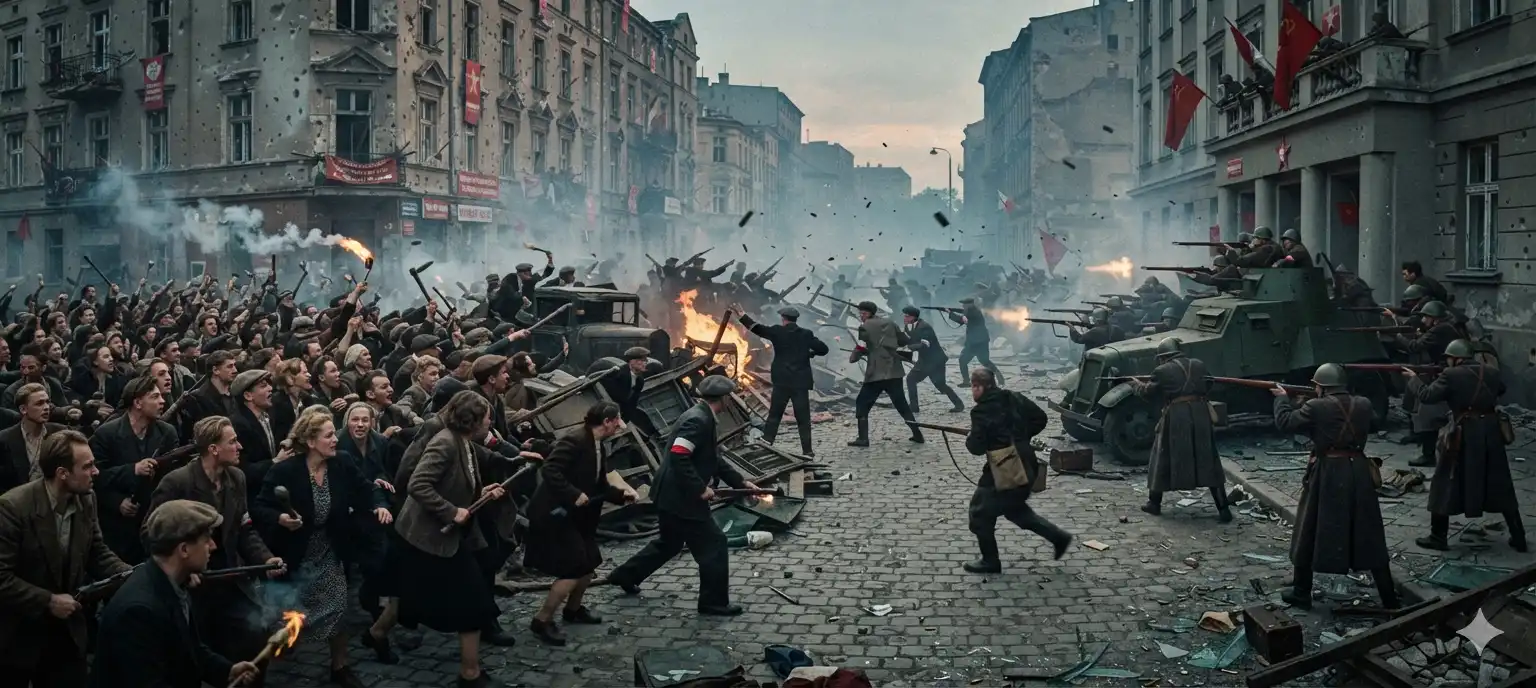
As tensions between Germany and the Soviet Union continued to rise, Berlin quietly established contacts with anti-Soviet groups in Soviet-controlled Poland. Nationalist organizations and underground networks expanded their activities, organizing protests that called for greater autonomy and an end to Soviet rule. The Soviet authorities responded with arrests and crackdowns, but instead of restoring order, the repression fueled even greater resistance. Demonstrations soon turned into violent clashes, government buildings were attacked, transport routes were disrupted, and armed resistance groups emerged in several districts. Within weeks, large parts of the region had descended into open rebellion, leaving Soviet control increasingly fragile.
As the rebellion spread across Soviet-controlled Poland, thousands of refugees fled toward the German frontier, bringing reports of growing violence and disorder. German border guards also reported sporadic exchanges of fire near frontier posts, allowing Berlin to argue that the unrest had become a direct threat to regional security. German newspapers portrayed the crisis as both a humanitarian emergency and a danger to peace, preparing public opinion for military intervention. Claiming the need to restore stability and protect its borders, Germany launched a swift offensive into Soviet-controlled Poland. German army crossed the frontier as the Luftwaffe established air superiority, striking railways, bridges, and Soviet military positions. At the same time, Polish insurgents intensified their uprising by capturing government buildings, sabotaging communications, and guiding German forces through the region. Caught between the advancing Wehrmacht and the expanding rebellion, Soviet formations fought a series of hard engagements before gradually retreating eastward, abandoning much of the territory.
As Soviet resistance collapsed, German forces secured the region's major cities, railway junctions, and government offices. The leaders of the anti-Soviet uprising were installed in prominent ceremonial positions and presented to the public as the representatives of a newly liberated Polish administration. Public rallies and official ceremonies celebrated the creation of a new government, creating the impression that Poland had regained self-rule. In reality, however, the new administration operated under close German supervision. While local officials handled day-to-day governance, Berlin retained control over security, foreign affairs, military policy, and the economy. The result was a German-aligned Polish state that appeared independent on the surface but remained firmly within Germany's political and strategic sphere of influence.
Joseph Stalin, the dictator of Soviet Union, viewed the uprising in Soviet-controlled Poland and Germany's intervention as a direct attack on Soviet authority. Furious at what he saw as German interference, he accused Berlin of using the rebellion as an excuse to expand its influence into Eastern Europe. Emergency meetings were immediately held in the Kremlin, where Stalin and his senior commanders discussed the growing crisis and the possibility of a wider war. In response, the Soviet Union ordered a large-scale military buildup along its western frontier. Fresh infantry, armored divisions, and artillery were rushed toward the border, while the railway network worked around the clock transporting troops and supplies. Air force units were placed on high alert, reconnaissance flights increased, and defensive positions were strengthened as Moscow prepared for the possibility of a direct confrontation with Germany.
As the crisis unfolded, Soviet propaganda portrayed the events in Poland as a German-backed act of aggression rather than a genuine uprising. Newspapers and radio broadcasts denounced the insurgents as traitors, while public rallies called on citizens to unite in defense of the Soviet state. Diplomatically, Moscow condemned Germany's intervention, warning that it threatened the balance of power in Eastern Europe and consulting neighboring countries about the growing crisis. Despite public demands for immediate retaliation, Stalin chose not to launch a full-scale counterattack. Believing the Red Army needed more time to prepare, he ordered continued military mobilization, reinforced the western frontier, and accelerated defensive planning. Although Soviet forces remained on alert, Stalin made it clear that Poland's loss was only temporary and that Moscow had not abandoned its claim to the territory.
Japan's attack on Pearl Harbor drew the United States into the war, leading many to expect Germany to immediately support its Axis ally by declaring war on America. Instead, Hitler chose a different path. Berlin announced that the attack had been planned and carried out entirely by Japan and was not part of any coordinated Axis strategy. In a public statement, Hitler expressed regret over the loss of life and emphasized that Germany had no quarrel with the United States. German diplomats reassured neutral nations that Berlin remained focused on Europe and sought to avoid conflict across the Atlantic. Privately, Hitler believed that if America remained concentrated on defeating Japan in the Pacific, it would have fewer resources and less political will to intervene in Europe. Germany therefore refused to declare war on the United States, while its propaganda presented the European and Pacific conflicts as two separate wars, hoping to keep American attention fixed on Asia as tensions with the Soviet Union continued to grow.
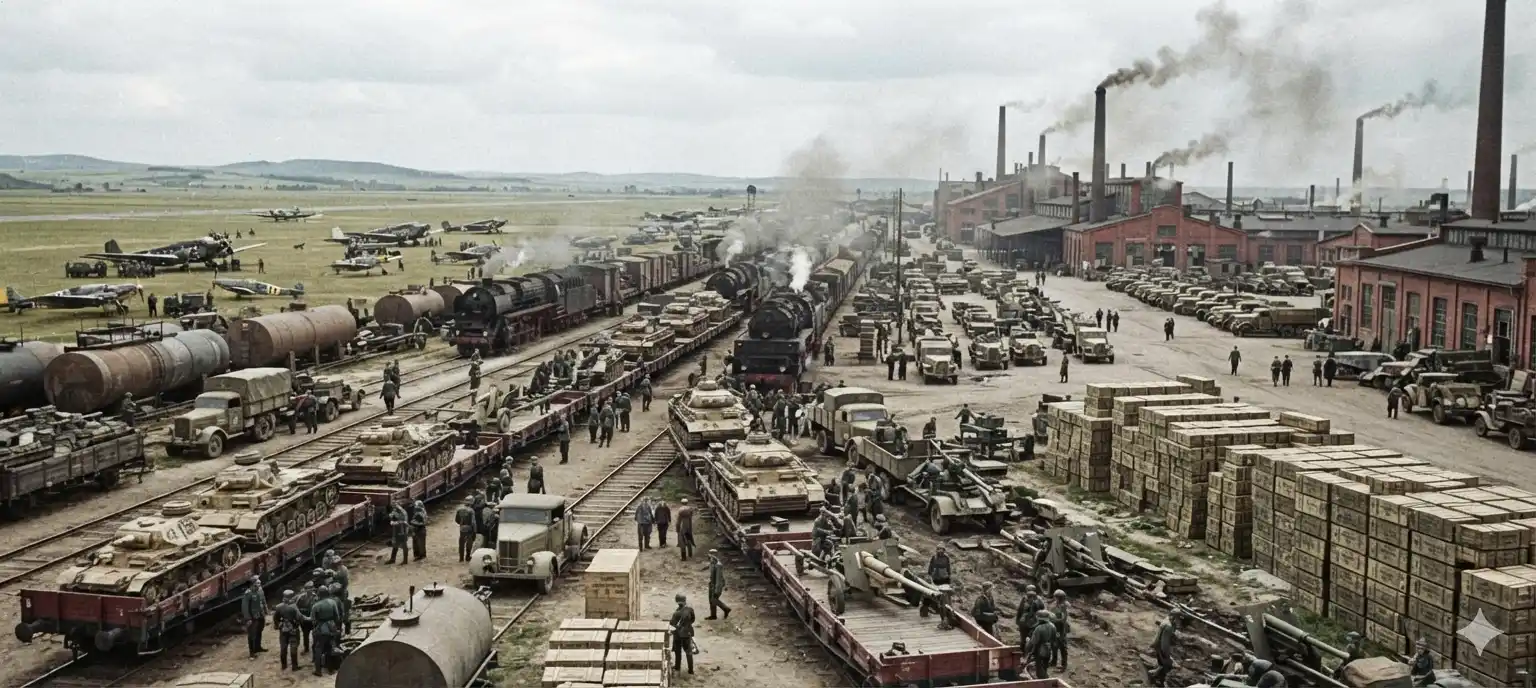
With peace secured in the west and its position firmly established across Europe and the Mediterranean, Germany spent months preparing for a major campaign against the Soviet Union. Instead of rushing into war, Hitler ordered a massive military and industrial buildup. Factories operated at full capacity, producing tanks, aircraft, artillery, vehicles, and ammunition, while new railways, airbases, fuel depots, and supply centers were constructed across occupied Europe to support a long-distance offensive. Germany's growing access to oil and raw materials—through trade agreements with the British Empire and a new commercial partnership with Iran—kept its industries running at maximum output and greatly strengthened its fuel reserves. Existing tanks and aircraft were upgraded, mechanized divisions expanded, and the Luftwaffe intensified pilot training. Rail networks were reorganized for rapid troop movement, vast stockpiles of food, fuel, spare parts, and ammunition were assembled, and engineering units prepared bridges, repair equipment, and field fortifications for the advance. By the time planning for Operation Barbarossa was complete, Germany had transformed its armed forces into a highly mechanized, well-supplied military capable of sustaining a prolonged campaign deep inside Soviet territory.
As German military activity along the western frontier continued to increase, senior Soviet generals and intelligence officers repeatedly warned Moscow that a major conflict was becoming more likely. Reports from border reconnaissance and military intelligence highlighted Germany's growing concentration of troops, equipment, and logistics in Eastern Europe. Many commanders urged Stalin to begin full-scale preparations by strengthening frontier defenses, mobilizing additional forces, and accelerating weapons production. Stalin, however, remained unconvinced that Hitler intended to launch an immediate invasion. Believing Germany was still focused on consolidating its gains in Western and Central Europe, he trusted that the existing non-aggression understanding would prevent a direct conflict for the time being. Convinced that his advisers were overstating the danger, he refused to place the Soviet Union on a full wartime footing. Although limited defensive measures were taken, resources were not concentrated along the western frontier on the scale many military leaders recommended. This hesitation left the Soviet Union only partially prepared, even as evidence of Germany's growing military buildup became increasingly difficult to ignore.
As the war increasingly shifted toward Eastern Europe, Germany and Turkey developed a closer, though unofficial, strategic relationship. While Turkey continued to declare its neutrality, confidential diplomatic contacts with Berlin became more frequent, with both governments sharing concerns about security in the Black Sea and Caucasus. Turkish leaders also viewed Germany as a useful counterweight to Soviet influence, a perspective shaped by centuries of conflict with Russia that had cost the Ottoman Empire large territories around the Black Sea, the Caucasus, and Southeastern Europe. At the same time, economic ties between the two countries expanded through trade in grain, machinery, industrial goods, and fuel, while German technical assistance supported Turkish railways, ports, and industrial development. Although no formal military alliance existed, regular consultations on regional security and border issues created an increasingly close strategic understanding. Turkey remained officially neutral, but its diplomatic positions and growing economic dependence on Germany led many foreign observers to regard it as an informal German partner in the region.
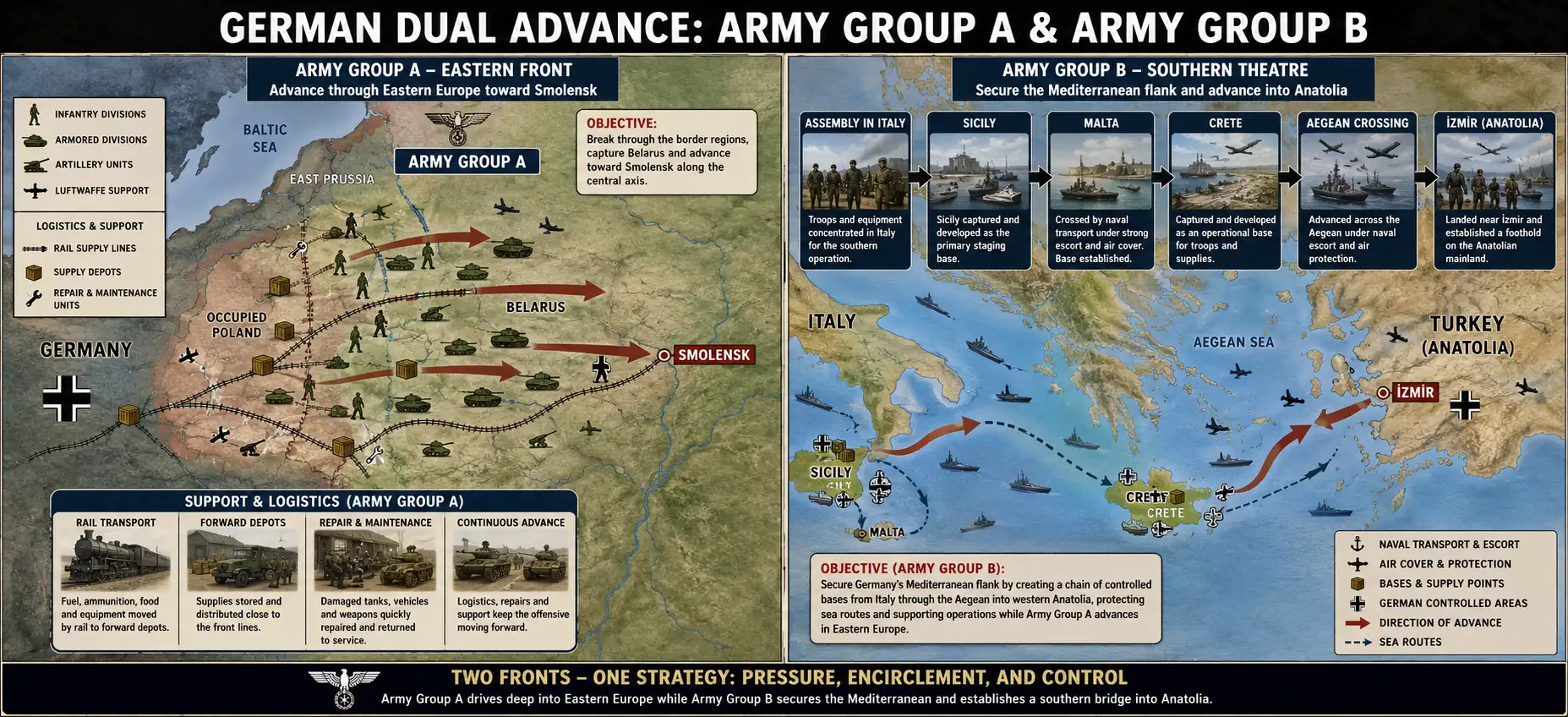
Germany organized its forces into two major operational groups for the coming campaign. Army Group A, the principal land force, assembled in occupied Poland and neighboring territories before beginning a gradual advance eastward. Its objective was to push through the border regions into Belarus and continue toward Smolensk along the central axis of the front. Infantry divisions captured and secured territory, while armored units spearheaded breakthroughs against defensive positions. Artillery provided long-range fire support, and the Luftwaffe conducted reconnaissance, attacked strategic targets, and protected advancing formations. Behind the front, an extensive logistics network transported fuel, ammunition, food, and equipment by rail to forward supply depots, which advanced alongside the army. Repair and maintenance units accompanied the columns, ensuring damaged tanks, vehicles, and weapons were quickly returned to service and allowing the offensive to maintain its momentum.
At the same time, Army Group B advanced through the southern theatre to secure Germany's Mediterranean flank. The force first assembled in Italy before moving into Sicily, which became its primary staging base. From there, troops crossed by naval transport to Malta and later to Crete under strong naval escort and continuous air cover. Both islands were developed into operational bases for troops, supplies, and equipment before the force continued across the Aegean toward the western coast of Turkey, landing near İzmir to establish a foothold on the Anatolian mainland. This southern advance was intended to complement the main eastern offensive by securing Mediterranean sea routes and creating a continuous chain of controlled positions stretching from Italy through the Aegean into western Anatolia, increasing strategic pressure while Army Group A advanced through Eastern Europe.
Germany supports both offensives through a coordinated logistics network. Factories produced tanks, aircraft, weapons, and ammunition, while repair facilities return damaged equipment to service. Railways transport fuel, food, and military supplies from industrial centers to forward positions, with supply routes extending as forces advance. Resources from occupied areas are collected through organized depots, and air units provide reconnaissance, deliver urgent supplies, and maintain communication between distant fronts.
The strategy relied on two simultaneous advances. One army moves east from Poland toward Belarus and Smolensk, while the other advances through Italy, Sicily, Malta, and Crete before landing near İzmir to establish a position in western Anatolia. Supported by a strong industrial and supply system, the plan aims to maintain momentum while forcing opponents to respond across multiple fronts.
As Germany completes its military buildup, Adolf Hitler orders Army Group A to quietly concentrate forces in eastern Poland near Terespol. Infantry, armored units, artillery, engineers, and supplies arrive by rail under heavy secrecy, with camouflage used to conceal the growing force. Soviet intelligence notices the unusual activity, and several commanders urge Joseph Stalin to strengthen border defenses and mobilize reserves.
Stalin dismisses these warnings, believing Germany will honor its non-aggression agreement and viewing the troop movements as political pressure or military exercises. He refuses a full mobilization and instructs officials to avoid actions that could raise tensions.
Meanwhile, Army Group B secretly assembles near the Georgia–Turkey border under the cover of infrastructure work and routine logistical movements. Strict security keeps most of the operation hidden, and the limited intelligence reaching Moscow fails to reveal its true purpose. By the end of the preparations, Germany has positioned two major army groups for separate offensives while the Soviet Union remains without a coordinated response.
Army Group B launches the southern offensive after secretly assembling near the Georgia–Turkey border under the cover of diplomatic cooperation and logistical activity. Accompanied by several Turkish regiments, the force crosses into Soviet territory before dawn, catching Soviet border guards unprepared for a full-scale invasion. Many frontier outposts are abandoned as communications with higher headquarters break down, leaving regional commanders with only fragmented reports of the attack. Exploiting the confusion, Army Group B advances north along the main transportation corridor. Bolnisi falls after Soviet authorities withdraw to stronger defensive positions, followed by the capture of Marneuli, where key railway stations and road junctions are secured to support the advancing logistics network. The offensive then reaches Tbilisi. Facing the threat of encirclement and lacking immediate reinforcements, Soviet commanders evacuate government offices and military installations before the city is occupied. German forces establish headquarters in the capital while engineers repair roads, inspect bridges, and prepare supply depots. With supply lines now extended, Army Group B pauses its advance to repair vehicles, service armored units, replenish fuel, ammunition, and food, and reorganize before any further operations toward the northern mountains.
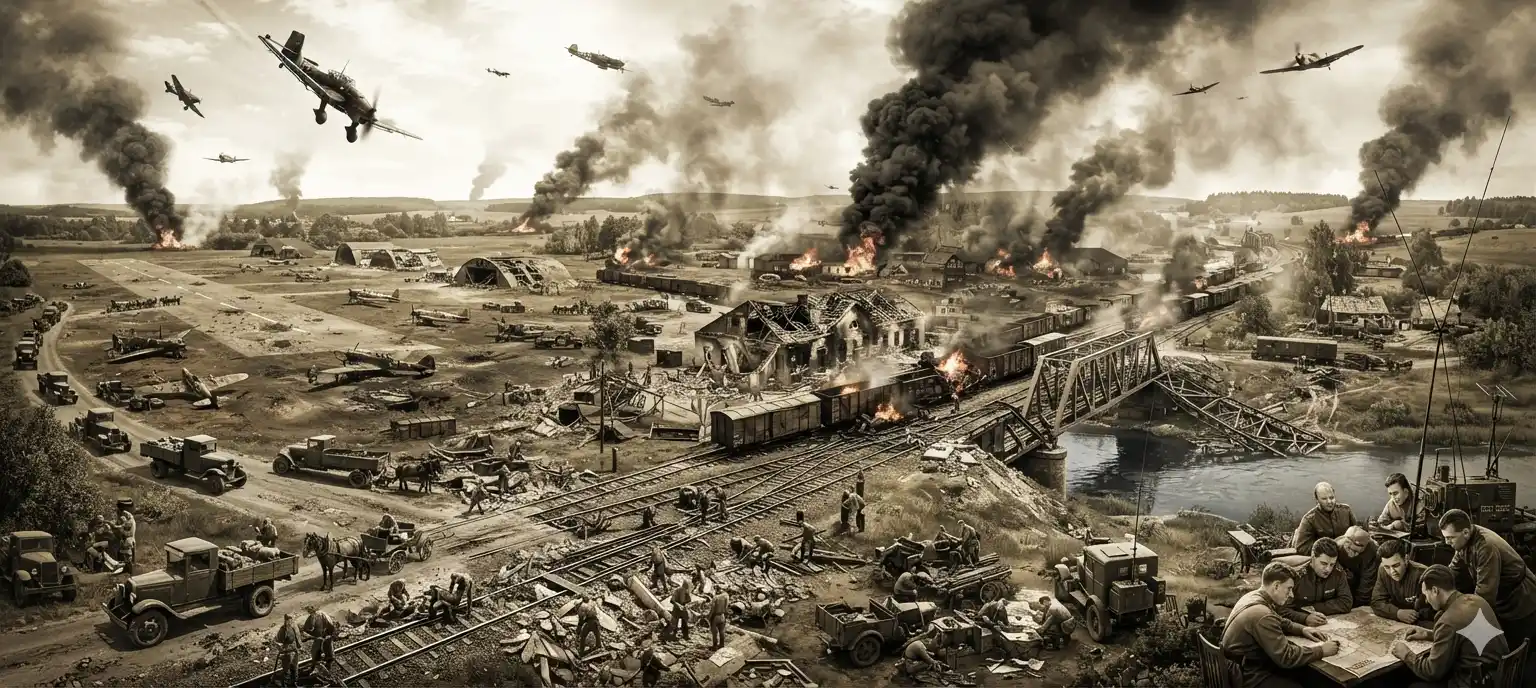
Germany begins the northern phase of the invasion with a large-scale Luftwaffe air offensive across Belarus. Over several days, repeated strikes target military infrastructure, transportation networks, and logistical facilities to weaken Soviet defenses before the ground assault. Military airfields are heavily attacked, damaging runways, disrupting maintenance areas, and forcing aircraft to disperse. Railway junctions, freight yards, and major transport hubs are repeatedly bombed, slowing the movement of troops and supplies. Communication centers, command posts, fuel depots, and ammunition storage sites also come under sustained attack, causing frequent interruptions to telephone and telegraph networks and making coordination between headquarters and frontline units increasingly difficult. Bridges and key road intersections become congested as damaged infrastructure diverts convoys onto alternate routes. Although engineering teams work to restore transportation links, continued air attacks hamper repair efforts. By the time the ground offensive begins, Soviet logistics, communications, and transportation across much of Belarus are under severe strain, leaving defensive forces less able to coordinate their response.
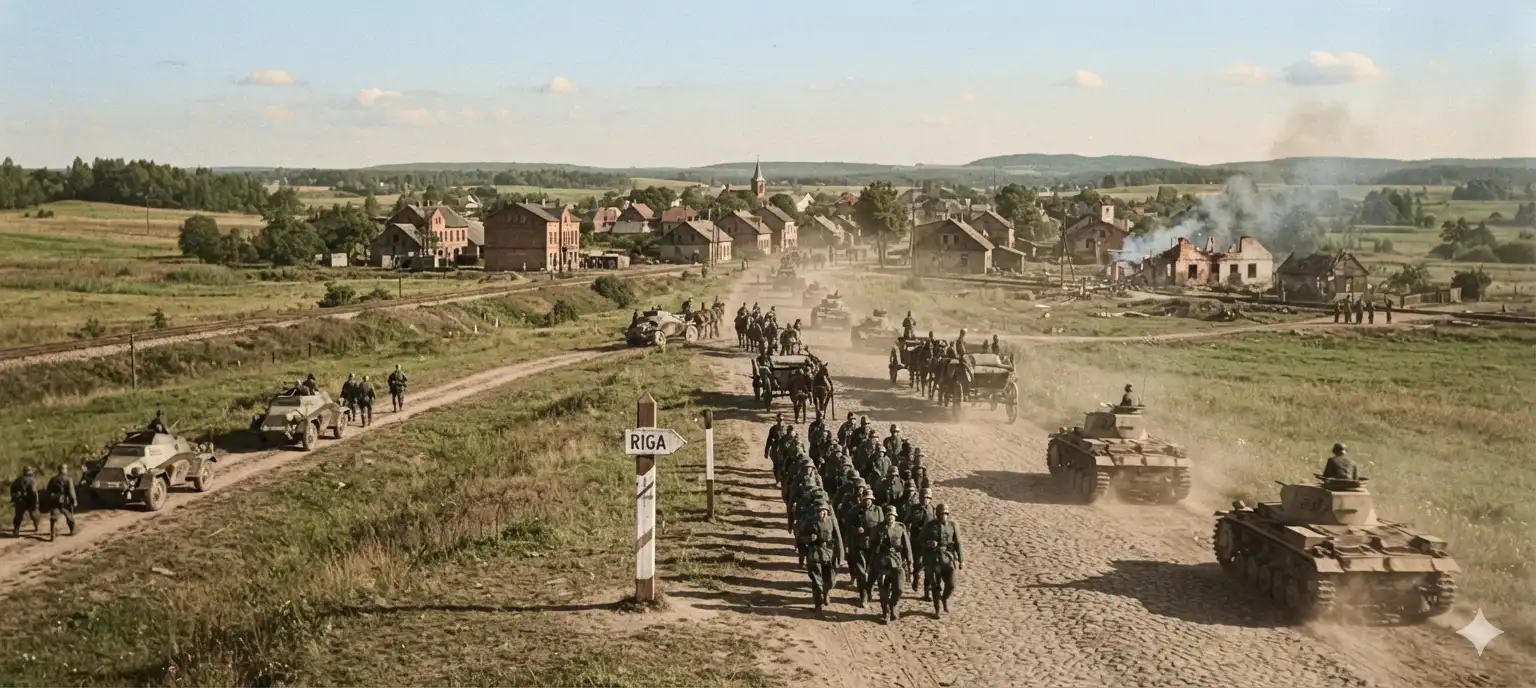
Following the air campaign, Army Group A launches the main land offensive from the Terespol staging areas, crossing into Soviet-held Belarus. The first objective, Brest, falls after determined Soviet resistance weakens under heavy fighting and growing isolation, forcing defenders to withdraw eastward. The advance continues through Kobrin and Baranavichy, where delaying actions and damaged transport infrastructure briefly slow progress. German engineers restore key routes while logistics units establish forward supply points to sustain the offensive. Moving through Slonim and Ivatsevichy, Soviet forces conduct orderly withdrawals as German formations face increasing logistical demands from their rapid advance. The offensive finally reaches Pinsk, where Army Group A halts to consolidate its gains, repair vehicles, replenish supplies, and establish the city as a major forward operating base before continuing the eastern campaign.
The nearly simultaneous reports of German offensives in Belarus and Georgia throw the Soviet High Command into confusion. What had initially appeared to be isolated incidents is quickly recognized as a coordinated invasion on multiple fronts. The warnings of senior Soviet generals are proven correct, shattering Joseph Stalin's belief that Germany would honor its agreements and avoid war. As Germany secures footholds in both Belarus and Georgia, Moscow struggles to organize an effective response. The opening weeks of the invasion left Stalin deeply shaken. Realizing that his reluctance to authorize broader defensive preparations may have weakened the Soviet Union, he briefly withdraws to a secluded government residence, where he reviews intelligence reports while uncertainty spreads through the government and military. Senior generals continue coordinating emergency defenses, ordering reinforcements, expanding military production, and preparing new defensive lines. Trusted advisers eventually persuade Stalin to return to Moscow, arguing that the Soviet Union's vast territory, manpower, and industry still provide the means to resist. Resuming command, Stalin orders nationwide mobilization, strengthens defensive preparations, and reorganizes the country's resources for what is now recognized as a prolonged and existential war.
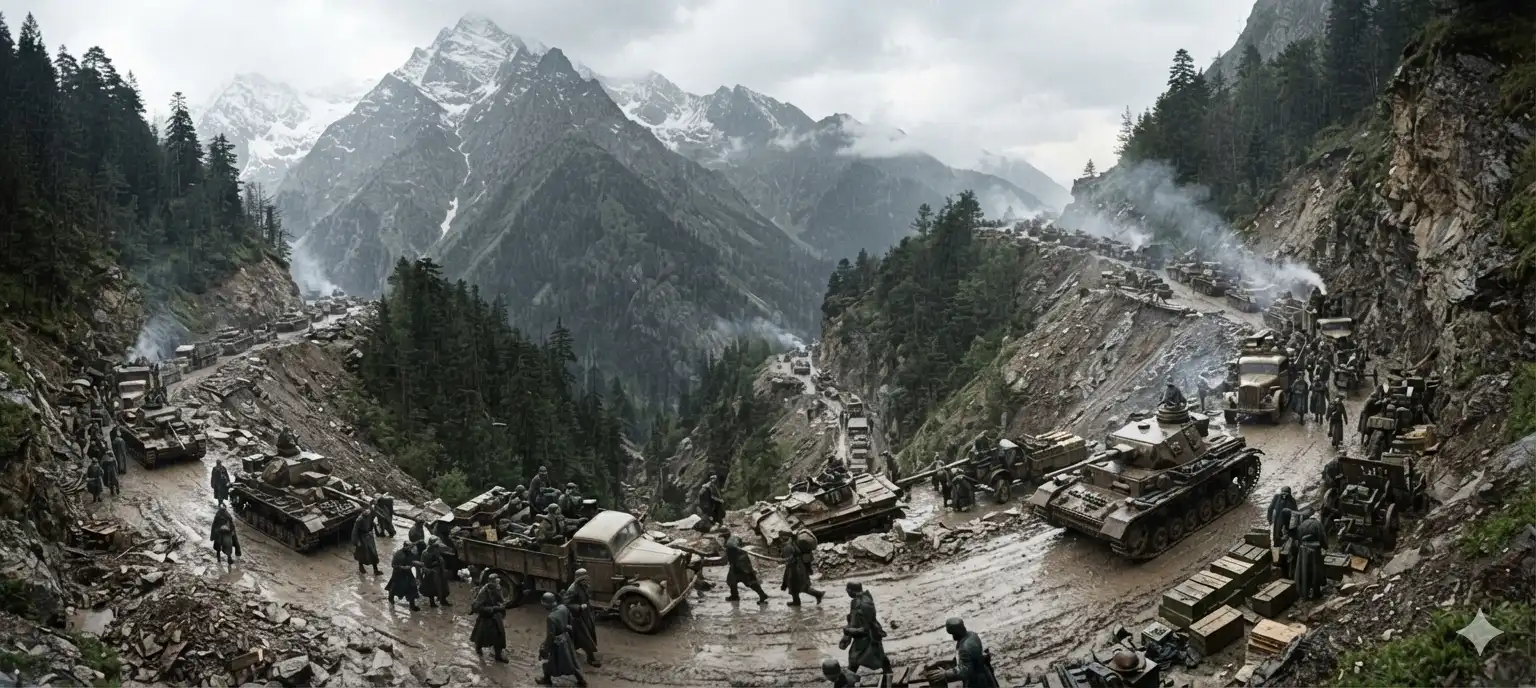
After refitting and replenishing supplies in Tbilisi, Army Group B resumes its advance, occupying Mtskheta before pushing into the Caucasus Mountains. The campaign slows dramatically as wide roads give way to steep passes, narrow mountain routes, and rugged terrain. Heavy rain, unstable roads, and frequent engineering work delay the advance, while difficult conditions place increasing strain on vehicles, tanks, artillery, and supply convoys. Maintaining logistics becomes far more challenging as fuel, ammunition, and spare parts take longer to reach frontline units. Soldiers also endure cold weather, exhausting marches, and unreliable communications caused by the mountainous terrain. Despite these obstacles, engineers, maintenance crews, and logistics personnel keep the offensive moving through constant repairs and route improvements. By the time Army Group B clears the most difficult sections of the Caucasus, it has preserved its combat strength but at the cost of worn equipment, depleted fuel reserves, and exhausted troops. The formation is forced to pause and reorganize before launching its next major operation.
With German forces advancing through Belarus and the Caucasus, Joseph Stalin calls an emergency meeting of senior military commanders, intelligence officials, and government leaders in Moscow. Reports from the front reveal that Germany has achieved significant momentum through coordinated operations, though commanders note that extended supply lines will eventually force the invaders to pause and reorganize. The Soviet leadership decides to abandon efforts to defend every section of the frontier and instead focus on preserving experienced formations through organized withdrawals. New defensive belts are planned around major rivers, cities, and transportation hubs to slow the German advance and create stronger positions for future battles. Reserve armies are ordered to move toward threatened sectors, with rail networks placed under military priority. On the Caucasus front, commanders recognize the defensive advantage of mountainous terrain and reinforce key approaches to delay enemy movements. Additional forces are concentrated around important operational centers in Belarus and Ukraine, while reconnaissance efforts are expanded to track German troop movements and supply lines. The meeting concludes with Stalin ordering full mobilization. Reserve forces are called up, military production increases, and transportation systems are placed under wartime control. The Soviet leadership accepts that the opening battles cannot be immediately reversed and adopts a strategy of trading territory for time while preparing for a prolonged conflict.
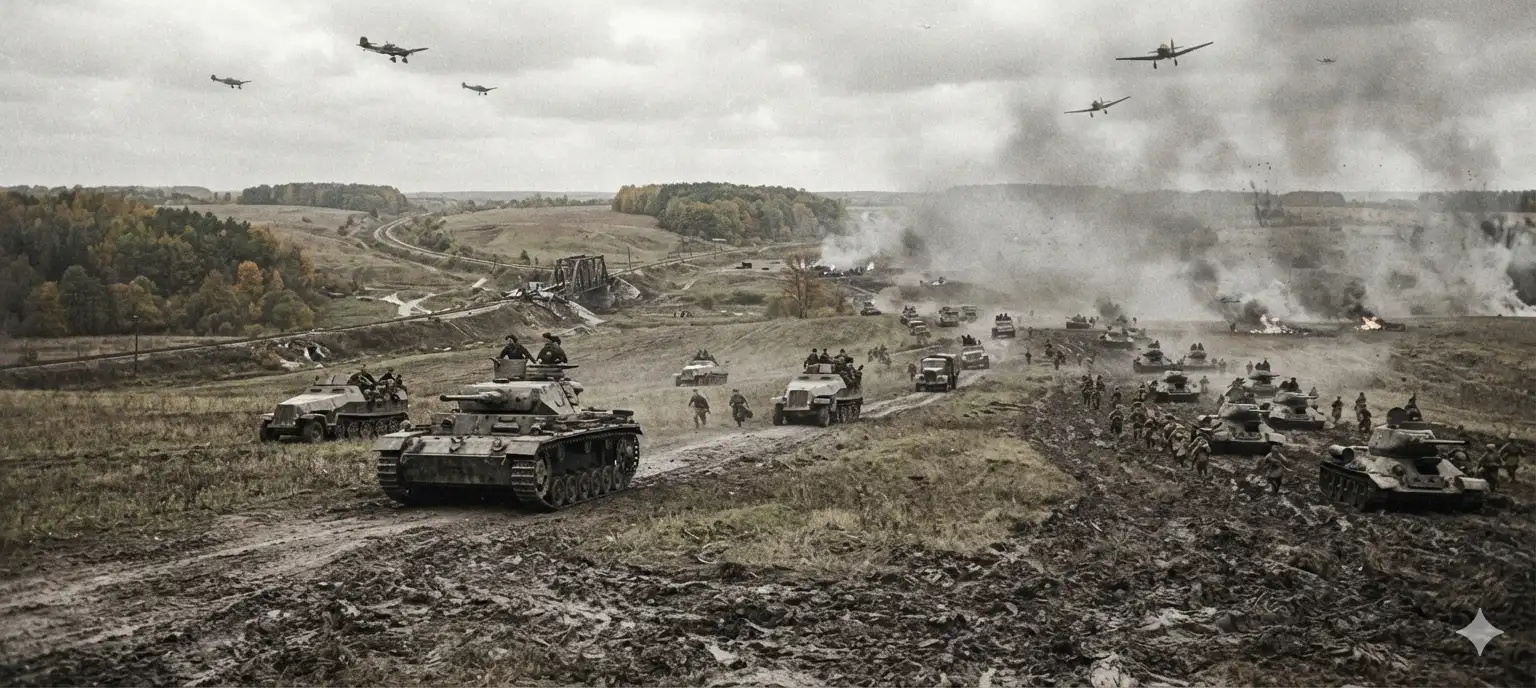
After reorganizing at Pinsk, the German High Command divides Army Group A into two formations to pursue separate objectives. Army A1 remains at Pinsk, transforming the city into a major forward base by expanding supply depots, strengthening defenses, and establishing maintenance facilities to secure communication lines and support future operations. Army A2 moves south into Ukraine, advancing through Chernihiv and Nizhyn while Soviet forces conduct delaying actions before withdrawing. The formation continues toward Kyiv expecting another rapid victory, but encounters much stronger resistance than anticipated. Reinforced Soviet defenses and newly arrived units halt the German advance around the city. Unable to achieve a breakthrough and facing growing supply difficulties, Army A2 withdraws toward Nizhyn in an organized retreat. There it rebuilds its defenses, restores supplies, and prepares for future operations. The setback at Kyiv becomes a turning point, showing that Soviet forces are recovering from the initial shock and can mount serious resistance at key locations.
While Army Groups A and B continue operations elsewhere, Adolf Hitler authorizes the creation of Army Group C to open a new front in the Baltic region. Its objective is to advance toward the Baltic states, secure the northern approaches, and force the Soviet Union to divide its defensive resources across a wider battlefield. Army Group C assembles in eastern Poland, with Terespol serving as a major staging area for troops, armored units, engineers, and supply convoys preparing for the northward advance. The formation moves through Biała Podlaska and Siedlce, where military headquarters, fuel depots, maintenance facilities, and communications networks are established to support continued operations. As the force prepares to move toward the Suwałki Region, engineers secure roads and bridges for heavy equipment while Soviet intelligence detects unusual German troop movements. The emergence of Army Group C signals Germany’s broader strategy of applying pressure on multiple fronts, further complicating Soviet efforts to coordinate a unified response.
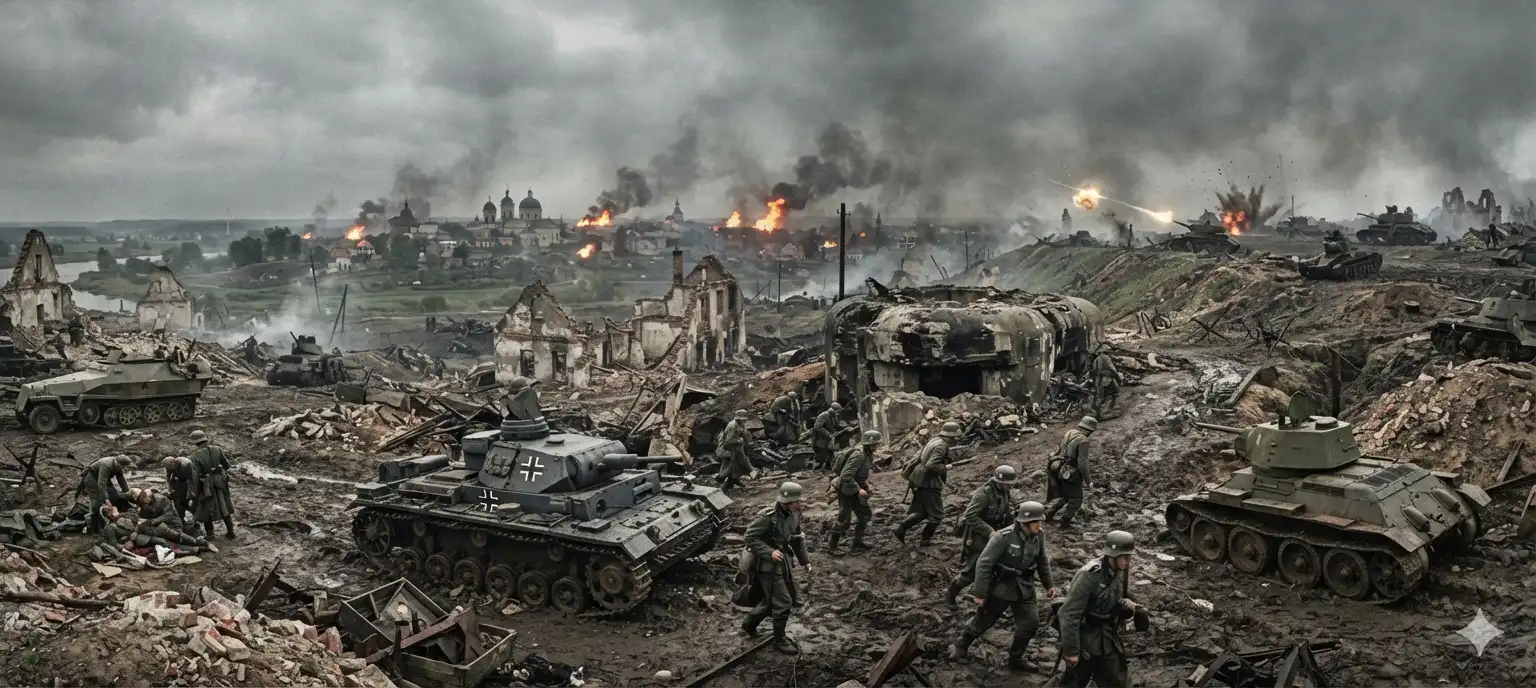
As Army Group C advances toward the Suwałki Region, its momentum slows at Łomża, where Soviet commanders have prepared stronger defenses than in earlier engagements. Using local terrain, fortifications, and coordinated positions, Soviet forces contest key roads and access points, turning the expected rapid advance into a prolonged battle. German armored and infantry units face determined resistance, gaining ground only through costly fighting. Casualties increase, equipment losses rise, and damaged tanks, vehicles, and engineering equipment require constant repairs. Supply systems also come under pressure as ammunition use increases, fuel reserves decline, and medical facilities struggle to handle growing numbers of wounded. After extended combat, Army Group C captures Łomża, but the victory comes at a significant cost. Several formations require reinforcement, vehicles need repairs, and operational momentum slows. The German command orders a pause to restore combat strength, replenish supplies, and reorganize units before continuing the campaign.
The heavy losses suffered around Łomża lead Adolf Hitler to reinforce Army Group C before its northern advance continues. Fresh infantry units, replacement crews, engineers, and logistics personnel arrive from rear areas, while repaired vehicles and new supplies restore the formation’s fighting capability. Łomża becomes a major operational center as hospitals treat casualties, workshops repair damaged equipment, and supply depots are filled with fuel, ammunition, and food. Commanders use the pause to reorganize weakened units and prepare for renewed operations. Before the advance resumes, Germany launches an intensive air campaign against military infrastructure in the Augustów area and the Suwałki Region. Railways, communication centers, and supply facilities are repeatedly targeted, disrupting Soviet movements and creating uncertainty among local commanders. With Army Group C restored, reinforced columns move from Łomża toward Augustów, facing only scattered resistance as Soviet defenses struggle to recover. After capturing Augustów, German forces continue into the Suwałki Region, expanding their northern position while placing greater pressure on Soviet coordination across multiple fronts. Although the advance succeeds, German commanders recognize that each new gain stretches supply lines and increases the challenge of maintaining a wider battlefield. The occupation of Augustów and Suwałki provides a stronger base for future Baltic operations but also reveals the growing demands of the extended campaign.
Originally planned to advance toward Smolensk, Army A1 changes direction after Army A2 encounters unexpectedly strong Soviet resistance near Kyiv. Recognizing the city's strategic importance as a transportation hub, the German High Command orders Army A1 to pause its eastern advance and send reinforcements, equipment, and supplies from Pinsk to support the stalled offensive. The arrival of fresh forces allowed German commanders to reorganize and launch a renewed assault on Kyiv. The second phase of the battle becomes a prolonged and costly struggle, with intense fighting around the city's approaches as Soviet defenders attempt to hold key positions and transport routes. After extended combat, Soviet resistance collapses and Kyiv falls under German control. The victory comes with heavy losses on both sides, while the city suffers severe damage from fighting, bombardment, fires, and destruction during the withdrawal. Following the capture, German authorities begin restoring damaged infrastructure, securing supply routes, and establishing control over the city. Although Kyiv becomes a major strategic gain, the battle reveals the increasing cost of the expanding campaign.
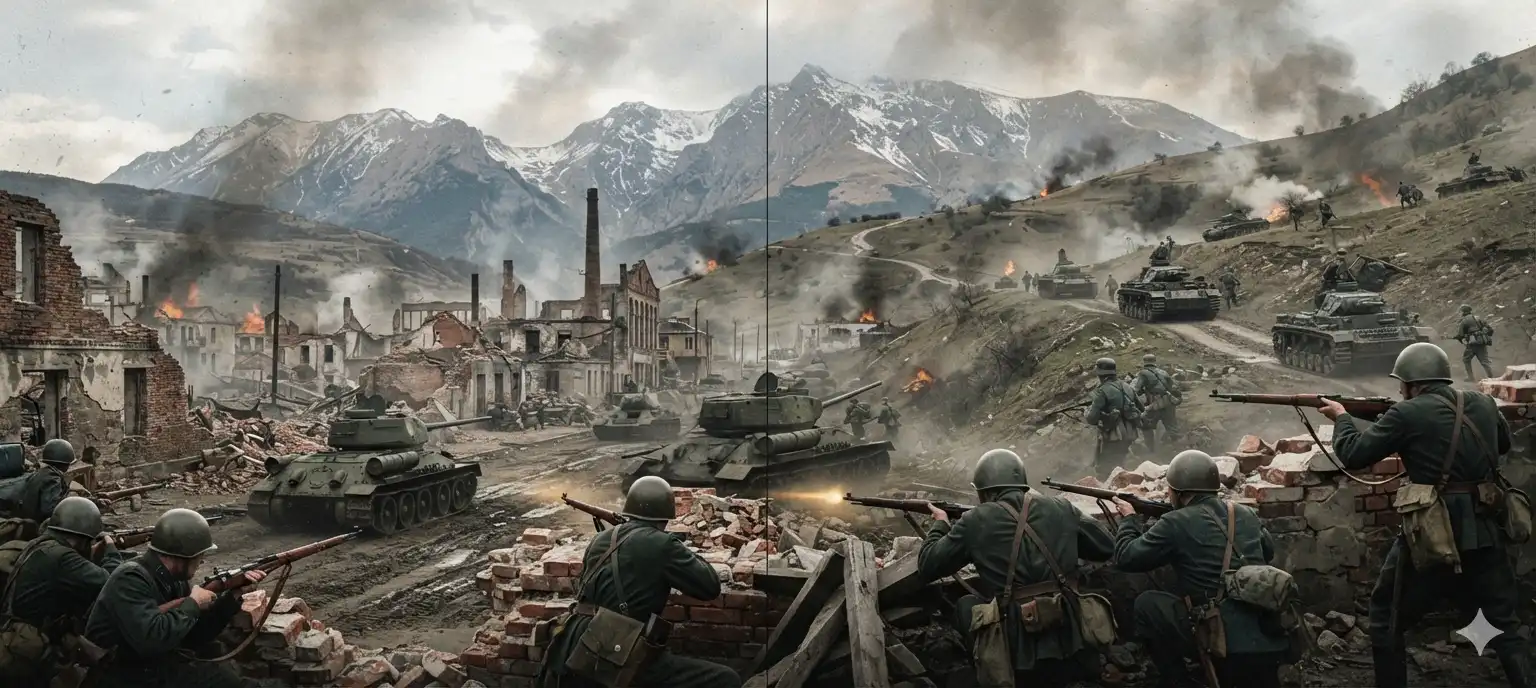
Alarmed by the German advance through Georgia and the Caucasus Mountains, Joseph Stalin orders immediate reinforcements to the North Caucasus and places Marshal Georgy Zhukov in charge of coordinating the defense. Soviet forces strengthen defensive positions, prioritize military transportation, and prepare to protect the region’s strategic resources, especially its oil-producing areas.
Despite the exhaustion caused by the mountain crossing, Army Group B is ordered to continue its offensive. German units push forward while dealing with worn equipment, extended supply lines, and fatigued personnel. The resulting campaign becomes a prolonged struggle, with fierce fighting over towns, transportation routes, industrial facilities, and resource areas.
Neither side achieves a quick victory as German forces face increasing logistical difficulties and Soviet defenders maintain determined resistance.
After sustained pressure and reinforcements, Soviet formations begin an organized withdrawal from parts of the region, allowing Germany to secure major infrastructure and oil-related assets.
The victory leaves Army Group B heavily strained, with rising casualties, damaged equipment, and growing supply challenges. The campaign also leads Hitler to reconsider the role of Turkish contingents attached to the army, as differences in training, equipment, and coordination limit their effectiveness in major offensives. They are reassigned mainly to security and support duties while veteran German formations remain the core of future operations.
Although Germany gains valuable territory and resources, the North Caucasus campaign demonstrates the growing difficulty of maintaining a vast front with extended supply lines and increasing demands on military resources.
The loss of much of the North Caucasus forces Stalin to reorganize the southern command structure. Marshal Georgy Zhukov is recalled to Moscow, while Marshal Aleksandr Vasilevsky takes control of the southern theater with the mission of stopping Army Group B’s advance. After assessing the situation, Vasilevsky decides that an immediate counterattack would be too costly. Instead, he orders the creation of a strong defensive line along the Don River, using the natural barrier to slow German forces and allow time for reinforcements to arrive. Soviet engineers strengthen river crossings and key routes, reserve formations are moved into position, and supplies are redirected to support the defense. The Don becomes the center of Soviet planning as commanders establish fallback positions, protect vital resources, and restore morale. The new defensive line is intended not only to halt the German advance but also to preserve Soviet strength for future operations.
Following the setbacks in the south and the creation of the Don River defensive line, Joseph Stalin becomes convinced that Germany plans the complete conquest of the Soviet Union. Intelligence reports showing massive German mobilization reinforce this belief, leading him to order the construction of additional defensive positions deep inside Soviet territory. Engineers begin strengthening the Ugra River sector, preparing fortifications, securing crossings, and building supply reserves for a possible German advance toward Moscow. Reserve formations and railway resources are redirected to support these interior defenses, reducing the number of forces available closer to the active front. However, Hitler’s actual objectives remain more limited, focused on consolidating captured territories, securing transport routes, and controlling valuable resources rather than immediately advancing deep into Soviet territory. This difference in strategic assumptions creates a major imbalance, as Stalin prepares for an invasion that Germany is not yet planning while weakening some forward defensive sectors.
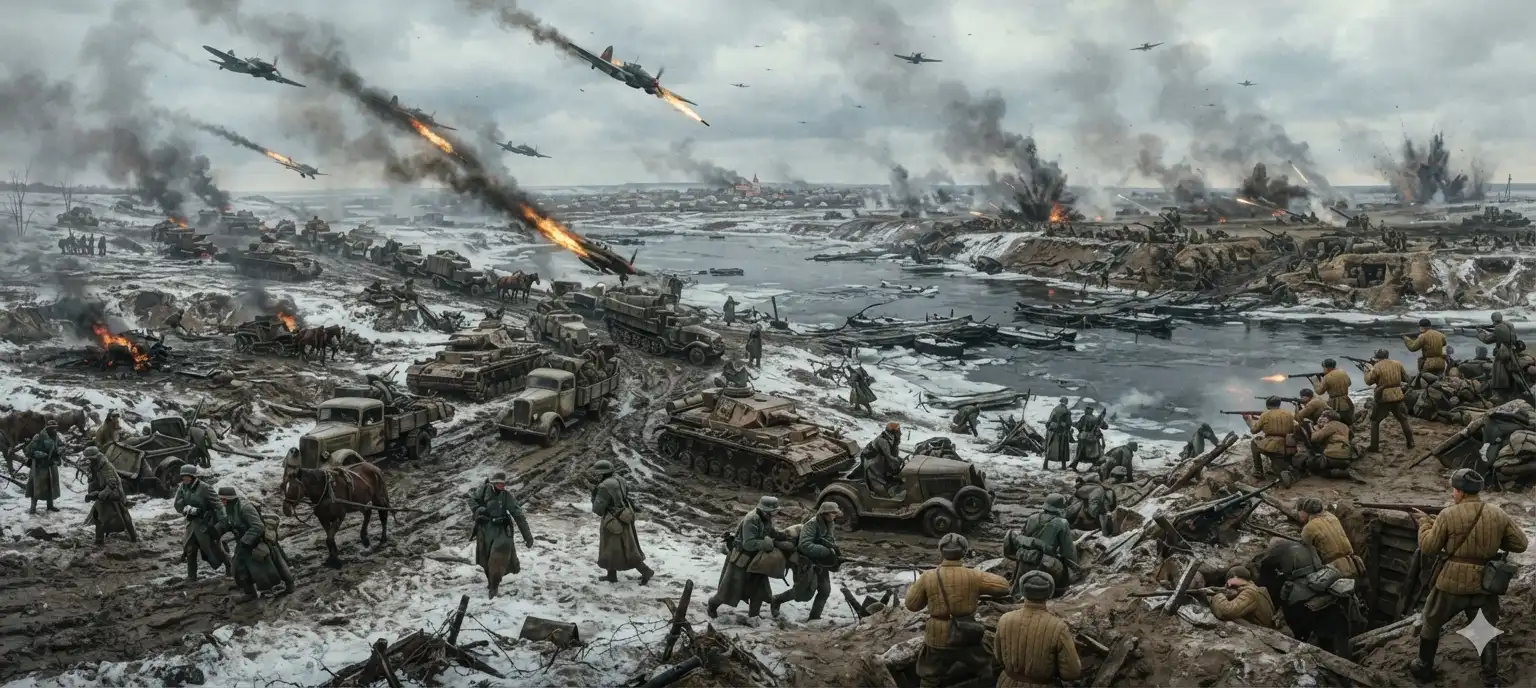
After securing much of the North Caucasus, Army Group B advances toward Rostov-on-Don, aiming to strengthen German control of southern transportation networks. However, as the force approaches the Don River, Soviet defenders are prepared to resist the advance. Soviet air attacks disrupt German movements, damaging supply routes, transport vehicles, and communication links. Reinforced Soviet formations then launch coordinated defenses along the river, preventing German units from establishing secure positions and forcing prolonged fighting across multiple sectors. Already weakened by months of campaigning and the difficult Caucasus operations, Army Group B struggles with equipment failures, supply shortages, and rising casualties. German commanders eventually order an organized withdrawal back toward secured positions in the North Caucasus to preserve the remaining combat strength. The retreat leaves German units exhausted and in need of repairs and reinforcements, while the Soviet defense of the Don River becomes a major morale boost. The battle proves that prepared defenses and concentrated reserves can halt even a powerful advancing force.
After reorganizing in the Suwałki Region, Army Group C launches its northern offensive into Lithuania, with Kaunas as one of its first major objectives. Before ground forces arrive, German aircraft strike airfields, railway junctions, communication centers, and military facilities, disrupting defensive coordination and isolating many units. Taking advantage of the confusion, German armored and mechanized formations advance rapidly across the country. Kaunas falls, followed by operations toward Vilnius, Panevėžys, and the Baltic coast, where German forces secure important roads, railways, and port facilities at Klaipėda. As the military situation deteriorates, Lithuanian leaders evacuate toward Soviet-controlled areas while isolated defensive units surrender or disperse. German forces quickly establish control over major cities and transportation networks, creating occupation headquarters and restoring infrastructure needed for continued operations. The rapid capture of Lithuania strengthens Germany’s position in the Baltic region and provides a new base for future advances farther north and east.
As German forces continue advancing across multiple fronts, Soviet generals urge Joseph Stalin to make a stronger stand in Ukraine, warning that abandoning the region would give Germany valuable resources, industrial assets, and strategic advantages. They argue that a determined defense could slow the invasion and weaken the German advance. Stalin reaches a different conclusion, believing that Germany’s campaign will become overstretched the farther it moves into Soviet territory. Drawing on historical examples of failed invasions of Russia, he decides that preserving Soviet forces is more important than defending every position at all costs. Under this strategy, commanders are ordered to avoid unnecessary destruction of their armies and conduct organized withdrawals where required. Civil authorities begin evacuations, industries are relocated when possible, and resources are denied to the advancing enemy. Stalin believes that extended supply lines, harsh conditions, and the approaching winter will gradually weaken German forces, allowing the Soviet Union to rebuild and prepare for future offensives. Although many commanders fear that surrendering territory will strengthen Germany, the Soviet leadership adopts strategic depth as its main defensive approach.
As Stalin adopts a strategy of strategic withdrawal, Soviet forces across Ukraine receive limited reinforcements and begin falling back toward stronger positions. German reconnaissance identifies weakened defensive sectors, allowing the German High Command to order Army A2 to continue its advance after securing Kyiv. Leaving garrison forces behind in the city, Army A2 moves rapidly across Ukraine with multiple formations advancing along different routes. Mechanized units capture key transportation centers around Bila Tserkva, while other columns move through Konotop, Poltava, and toward Kremenchuk, facing only scattered resistance as many Soviet units retreat or surrender. The offensive then expands into the Donbas region, where German forces secure important industrial areas and transportation networks. Soviet commanders struggle to organize effective defenses due to limited reserves, disrupted communications, and the rapid pace of the German advance. Some units withdraw eastward, while others are isolated and forced to surrender. Within weeks, Germany occupies large areas of Ukraine, restoring roads, railways, and bridges to support further operations. Army A2 reaches significant sections of the Dnieper River, achieving a major territorial victory. However, the speed of the collapse surprises both sides and increases debate in Moscow over whether too much territory has been abandoned in anticipation of a deeper German advance.
After securing much of Ukraine, Germany expands its air operations from newly captured bases across the region. The Luftwaffe targets Soviet transportation hubs, supply depots, communications centers, and defensive positions near Rostov-on-Don and the Don River, leading to a major aerial battle for control of the skies. The Soviet air force in the sector suffers heavy losses, reducing its ability to challenge German operations. As a result, Soviet defenders along the Don face disrupted communications, delayed reinforcements, and increasing difficulty maintaining an organized defensive line. Using this advantage, Army A2 advances eastward from Ukraine and captures Rostov-on-Don, securing a key transportation center. At the same time, Army Group B moves north from the Caucasus, creating pressure on Soviet forces from multiple directions. Facing the threat of encirclement, Soviet units withdraw toward the east while isolated formations are forced to surrender. By the end of the operation, Germany controls a large area between the Dnieper and Don Rivers, strengthening its position in the south. However, the victory also creates longer supply routes and greater challenges in maintaining such an extensive occupied territory.
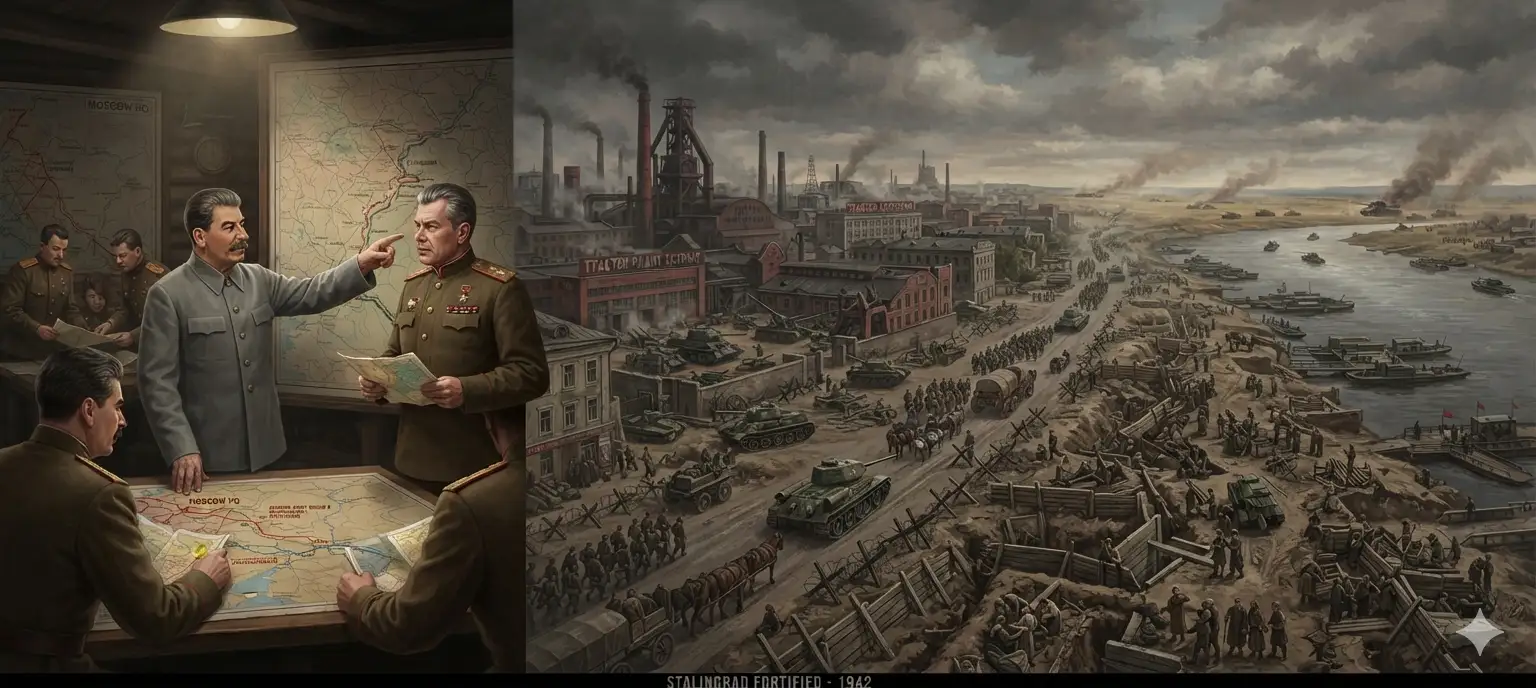
After Germany captures the territory between the Dnieper and Don Rivers, Army Group B is ordered to advance toward Stalingrad while Army A2 consolidates control of Ukraine and secures supply routes. In Moscow, Stalin appoints Marshal Aleksandr Vasilevsky to organize the defense of the city despite criticism from some officials over earlier setbacks. Vasilevsky quickly transforms Stalingrad into a fortified position. Defensive lines are expanded, industrial facilities are adapted for military use, and supplies of ammunition, fuel, food, and medical resources are stockpiled to prepare for a prolonged siege. Engineers strengthen key routes, create fallback positions, and improve infrastructure to withstand German attacks. The city's factories and transport networks are integrated into the defense effort, while reserve forces are positioned to reinforce threatened areas. By the time German forces approach, Stalingrad has become a heavily prepared stronghold designed to resist a long assault and prevent Germany from achieving a rapid victory.
After capturing the territory between the Dnieper and Don Rivers, Army Group B begins preparing for an advance toward Stalingrad. However, Adolf Hitler unexpectedly orders the offensive to be cancelled and instructs the formation to withdraw to prepared positions farther west. Hitler argues that capturing Stalingrad would require excessive resources while creating vulnerable supply lines deep inside Soviet territory. Instead, he chooses to consolidate Germany’s existing gains by strengthening defenses, improving infrastructure, and securing valuable agricultural, industrial, and resource areas already under occupation. Army Group B returns to positions around the North Caucasus and Don basin, where engineers expand fortifications, supply depots, and repair facilities. The focus shifts from rapid expansion to maintaining a defensible and economically productive frontier. The decision shocks Stalin, who had expected Germany to continue advancing deeper into Soviet territory until its forces became overstretched. When reports confirm the withdrawal, Soviet leaders debate whether Germany has changed its strategy or is simply preparing for another offensive. The shift forces Moscow to reconsider its assumptions about the direction of the war.
After securing Lithuania, Army Group C strengthens its supply network and begins its advance into Latvia from northern Lithuania. German forces move along multiple routes to prevent defenders from concentrating their forces, quickly capturing key roads and railway junctions. The first major objective, Jelgava, falls after limited fighting, allowing German engineers to repair infrastructure and support the continuing advance. The offensive then moves toward Riga, where German forces overcome scattered resistance and seize the capital’s administrative centers, railway facilities, and port. Following the capture of Riga, German units spread across Latvia, securing major transportation routes and industrial areas. As organized resistance collapses, officials and military leaders evacuate eastward while occupation authorities establish control and restore logistics networks. The conquest strengthens Germany’s position in the Baltic region and provides important ports and supply routes for future operations.
Following the rapid capture of Lithuania and Latvia, Soviet High Command rushes reinforcements toward Estonia through St. Petersburg. Rail networks and supply centers are reorganized to move fresh formations into the region, with Tallinn becoming the main defensive stronghold of the Baltic front. Soviet commanders transform Tallinn into a fortified zone by strengthening coastal defenses, building layered positions, and concentrating artillery to resist a potential German advance. Their goal is to preserve control of the Estonian coastline and maintain a Baltic foothold. Meanwhile, Germany adjusts its southern strategy after abandoning an immediate push toward Stalingrad. Army Group B is redirected toward more defensible positions, while Soviet Marshal Aleksandr Vasilevsky shifts attention to the Ugra River line, organizing deeper defenses and preparing fallback positions. Both sides begin moving away from rapid offensives and toward strategic preparation. Germany consolidates its gains, while the Soviet Union builds defensive belts designed to absorb future attacks, transforming the campaign into a wider struggle across the Baltic and Russian interior.
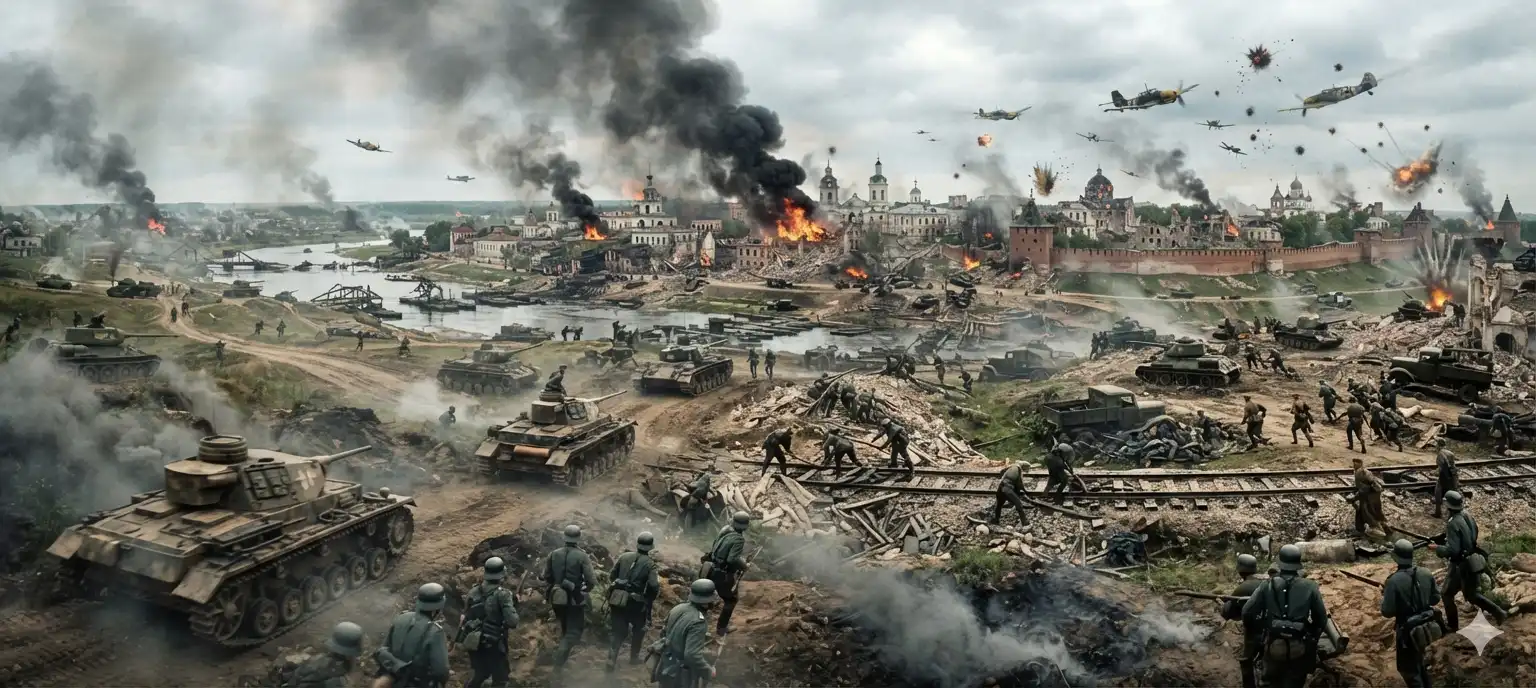
After reorganizing in Pinsk and coordinating with reinforced elements from Army A2, Army A1 resumes its eastern offensive toward Smolensk, a major transportation and communications hub. German forces advance through Minsk, where limited Soviet resistance allows them to secure the city before continuing toward Orsha. As the offensive reaches Smolensk, the Luftwaffe launches concentrated attacks against railways, bridges, communication centers, and defensive positions. The air campaign disrupts Soviet coordination and weakens their ability to maintain an organized defense. German armored and infantry formations then assault the city from multiple directions. Despite determined resistance in several sectors, disrupted communications and supply problems force Soviet units to withdraw. Smolensk falls under German control, after which engineers restore rail links, expand supply facilities, and transform the city into a forward base for further eastern operations.
After the capture of Smolensk and the consolidation of German positions across the Baltic, Ukraine, and the southern front, Adolf Hitler announces the end of major offensive operations against the Soviet Union. The decision surprises German commanders who had expected further advances and instead receive orders to establish defensive lines and strengthen occupied territories. German forces shift from expansion to consolidation. Military administrations are created in key cities, rail networks are repaired, industrial facilities are assessed, and engineering units improve fortifications and supply routes to support long-term occupation. The announcement forces Stalin and the Soviet High Command to reconsider their assumptions. They had expected Germany to continue advancing deeper into Soviet territory until its forces became overstretched, but the halt suggests a different strategy focused on securing captured regions. Within Soviet leadership, opinions divide. Some believe Germany has stopped due to limitations, while others warn that the occupied territories provide Germany with valuable resources and a stronger position. The war enters a new phase defined by consolidation, preparation, and uncertainty over whether the conflict has truly ended or only entered a temporary pause.
After consolidating its gains across Eastern Europe, Germany orders Army A1 to extend its position beyond Smolensk and secure the strategically important town of Vyazma. The advance moves quickly along the Smolensk axis, facing only limited Soviet resistance as German forces prioritize maintaining supply routes and avoiding overextension. Vyazma falls after brief fighting around transport routes and railway connections. German units secure surrounding roads, bridges, and communication lines, transforming the town into a forward operational center. Engineers then begin constructing a defensive network around Vyazma, including fortified positions, anti-tank barriers, artillery placements, and expanded rail facilities. Supply depots, repair workshops, and command centers are established to support long-term operations and connect the area with Smolensk and other occupied territories. The capture of Vyazma marks Germany’s shift from rapid expansion to building a fortified frontier. In Moscow, reports of the new defensive line create uncertainty, suggesting that Germany intends to hold its gains and prepare for a prolonged strategic confrontation.
As the Baltic campaign continues, Army Group C advances through Estonia with the objective of capturing Tallinn, the last major Soviet stronghold in the region. After securing Lithuania and Latvia, German forces move north from central Estonia, using multiple routes to isolate the capital rather than immediately launch a costly assault. The advance passes through Tartu, where scattered Soviet resistance fails to create a stable defensive line. German columns then move through Paide and Rakvere, converging around Tallinn from different directions and cutting off escape routes. Inside Tallinn, Soviet commanders strengthen defenses, position artillery, and prepare supplies for a prolonged siege. However, German forces avoid a direct attack and instead complete a wide encirclement, severing rail connections, blocking roads, and disrupting communications with the Soviet rear. With the city isolated and unable to receive reinforcements, Tallinn becomes increasingly vulnerable. The German encirclement effectively traps the remaining Soviet forces in Estonia and brings the Baltic campaign closer to complete German control.
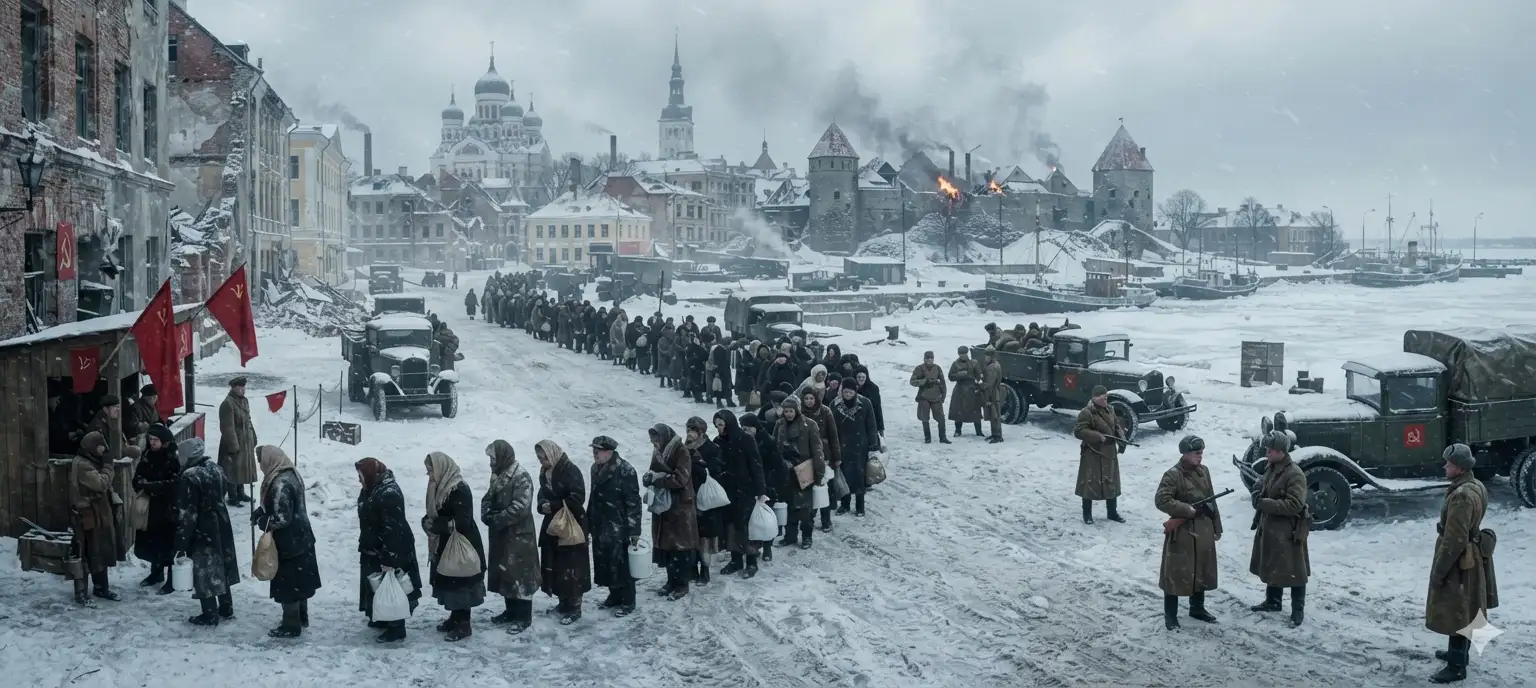
As winter deepens, the isolation of Tallinn begins to create a severe humanitarian and military crisis. Food reserves decline rapidly, rationing systems struggle to function, and essential supplies such as fuel, salt, and medical equipment become increasingly difficult to obtain. Long queues and shortages become a daily reality for the population. The Soviet garrison also faces growing difficulties. Ammunition is carefully conserved, artillery operations are reduced, and shortages of fuel and equipment limit the movement and coordination of military units across the city. Civilians suffer the most as heating supplies disappear and winter conditions worsen. Hospitals become overcrowded while lacking medicine, electricity, and basic materials, leading to rising illness and malnutrition. Although Soviet authorities continue efforts to maintain morale and discipline, the absence of supply routes and any immediate relief operation causes confidence in continued resistance to gradually weaken.
German forces continue the siege of Tallinn through containment rather than a direct assault. Patrols secure escape routes, artillery targets supply positions, and reconnaissance prevents organized Soviet relief efforts from reaching the isolated city. As the weeks pass, shortages of food, fuel, and medical supplies worsen. The combined effects of hunger, freezing conditions, and exhaustion weaken both civilians and defenders, reducing the ability to maintain organized resistance. Eventually, Soviet commanders conclude that further defense is unlikely to change the outcome and surrender the remaining forces in Tallinn. German troops enter the city, establish occupation control, and begin restoring key infrastructure and port facilities. Following the capitulation, Army Group C advances along the Estonian coast toward Paldiski and secures additional harbor areas, completing Germany’s control of the northern Baltic frontier. The campaign ends with a strategic victory for Germany but leaves Tallinn severely affected by the hardships of the siege.
As the Eastern Front stabilizes, Adolf Hitler shifts attention toward diplomatic consolidation in northern Europe. Germany announces support for Finnish independence from Soviet-imposed restrictions and guarantees that German forces will not invade Finland or conduct hostile operations against its territory. The declaration creates a major political opportunity for Finland, which seeks greater security against Soviet pressure while avoiding full integration into the German war structure. Diplomatic agreements are established covering limited military coordination, expanded trade, resource exchanges, and logistical cooperation. Although Finland remains formally separate, its closer alignment with Germany changes the strategic balance in the north. Soviet planners view the development with concern, recognizing that German-friendly Finland reduces Soviet flexibility around the Karelian and Leningrad sectors. The agreement allows Germany to strengthen its northern position through diplomacy while avoiding the risks of opening another major military front.
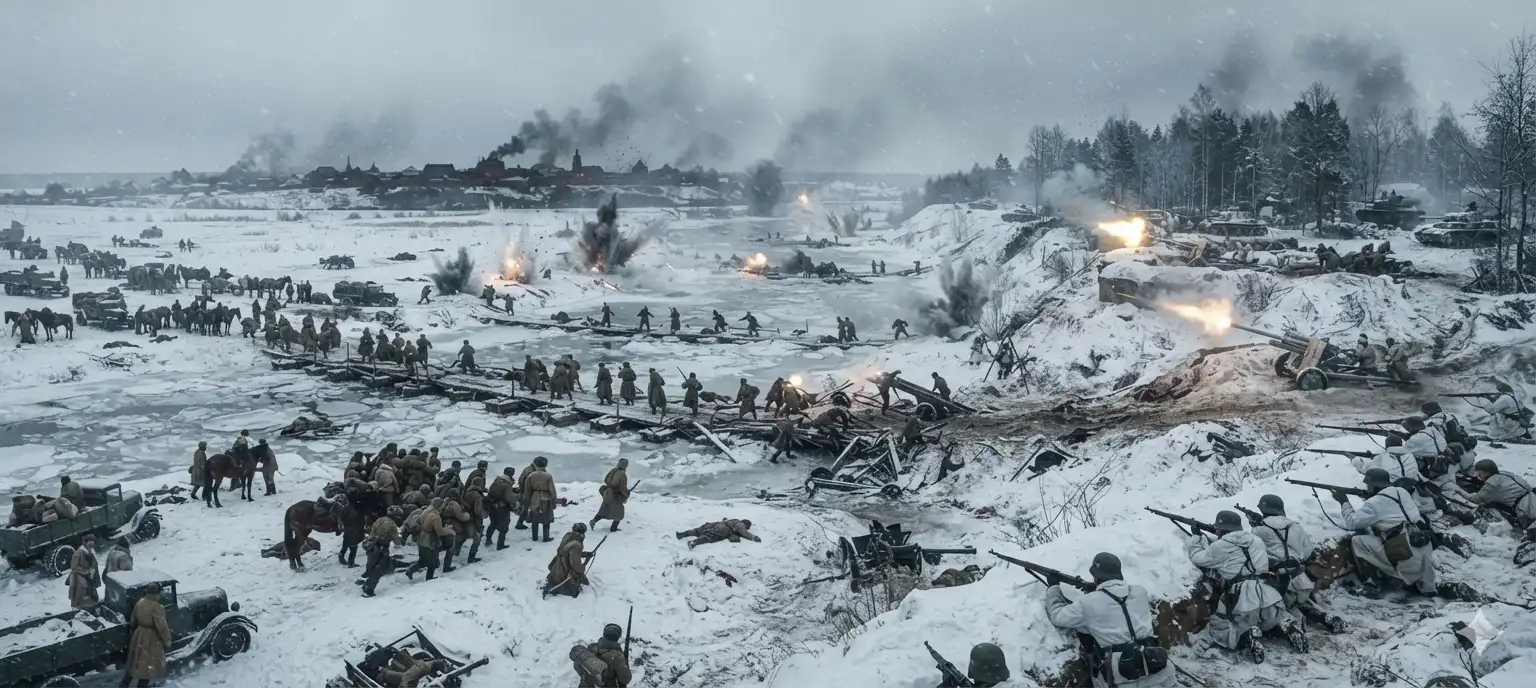
As winter conditions spread across the Eastern Front, Joseph Stalin orders a major Soviet offensive against German positions around Vyazma. Despite warnings from experienced generals about the risks of winter operations and difficult supply conditions, Stalin believes delaying the attack will allow Germany to strengthen its defenses. Soviet forces prepare to cross the Ugra River, with engineers building temporary bridges and units gathering under severe weather conditions. When the offensive begins, freezing temperatures, unstable ice, and limited crossing points slow the advance, causing congestion and disrupting unit coordination. German reconnaissance identifies the Soviet buildup before the attack. Instead of reacting immediately, German commanders prepare layered defenses around Vyazma, positioning artillery, infantry, and anti-tank units to strike Soviet forces as they become concentrated around the crossing areas.
Once Soviet forces commit to the Ugra River crossing, German commanders launch a coordinated defensive response designed to exploit the difficult winter conditions. Rather than immediately attempting a large counteroffensive, German forces focus on weakening the attacking formations through carefully planned strikes. Artillery targets key crossing points, bridgeheads, stalled supply columns, and exposed infantry units struggling to reorganize after crossing the river. Snow, freezing temperatures, and poor visibility further disrupt Soviet operations, causing vehicles to fail, communications to break down, and supply movements to slow. As Soviet formations become isolated and lose coordination, German forces conduct controlled counterattacks from fortified positions around Vyazma. Infantry units supported by armor strike weakened areas, exploiting gaps created by exhaustion, terrain difficulties, and disrupted Soviet logistics.
Following the failure of the Ugra River offensive, Stalin approved another major attempt to regain the initiative, this time concentrating on Ukraine and the Don Basin. German forces had established control over the region, but their troops were spread across numerous cities, rail junctions, and supply routes. Soviet intelligence believed this wide deployment had created vulnerabilities that could be exploited through a large-scale offensive.
Several senior Soviet commanders cautioned against the operation, arguing that many divisions were still recovering from earlier defeats and lacked the strength and coordination needed for another major campaign. Despite these concerns, the order was issued. The offensive aimed to disrupt German administration in Ukraine, cut vital supply lines, and force the Germans to abandon recently occupied territory.
To carry out the attack, Soviet forces were hastily assembled from central reserves and rear-area formations. In the opening stages, they achieved limited success, breaking through weakly defended sectors where German occupation forces were still consolidating their positions. A number of forward outposts were captured, and temporary disruptions were caused along administrative centers and key railway routes.
These early gains, however, proved difficult to sustain. The offensive lacked proper coordination, with different formations advancing at different speeds and communication between operational sectors often breaking down. As the attack progressed, the distance between the leading spearheads and their supporting forces steadily increased, leaving the advancing Soviet units vulnerable to a determined German response.
The German High Command reacted swiftly to the Soviet offensive, abandoning routine consolidation efforts in favor of a mobile defensive strategy. Rather than defending every position, German commanders concentrated their forces around key logistical centers, railway junctions, and communication hubs across Ukraine. Armored divisions were rapidly shifted along interior lines to confront the most exposed Soviet spearheads, while the Luftwaffe intensified reconnaissance and air strikes against Soviet supply routes and reinforcements. Instead of engaging in prolonged static battles, German forces focused on isolating advancing Soviet units and disrupting their ability to coordinate or reinforce their gains. As the offensive pushed deeper into contested territory, Soviet formations increasingly encountered well-organized German counterattack groups that used superior mobility, shorter supply lines, and established infrastructure to halt the advance and gradually regain the initiative.
After containing the Soviet advance, German commanders launched a series of coordinated counterattacks across the Ukrainian front. Armored and motorized formations struck the exposed flanks of advancing Soviet units, while infantry divisions secured key roads and railway junctions to prevent enemy reinforcements from reaching the battlefield. Supported by continuous aerial reconnaissance and close air support, the Germans exploited the growing gaps between Soviet spearheads and their supporting formations, steadily forcing them onto the defensive.
As German pressure intensified, Soviet formations found themselves increasingly isolated and unable to coordinate an effective response. Supply shortages, disrupted communications, and mounting casualties slowed the offensive, allowing German forces to regain lost ground sector by sector. What had begun as an ambitious attempt to reclaim Ukraine gradually turned into a fighting withdrawal, with Soviet commanders abandoning their initial objectives in order to prevent the encirclement and destruction of their forward armies.
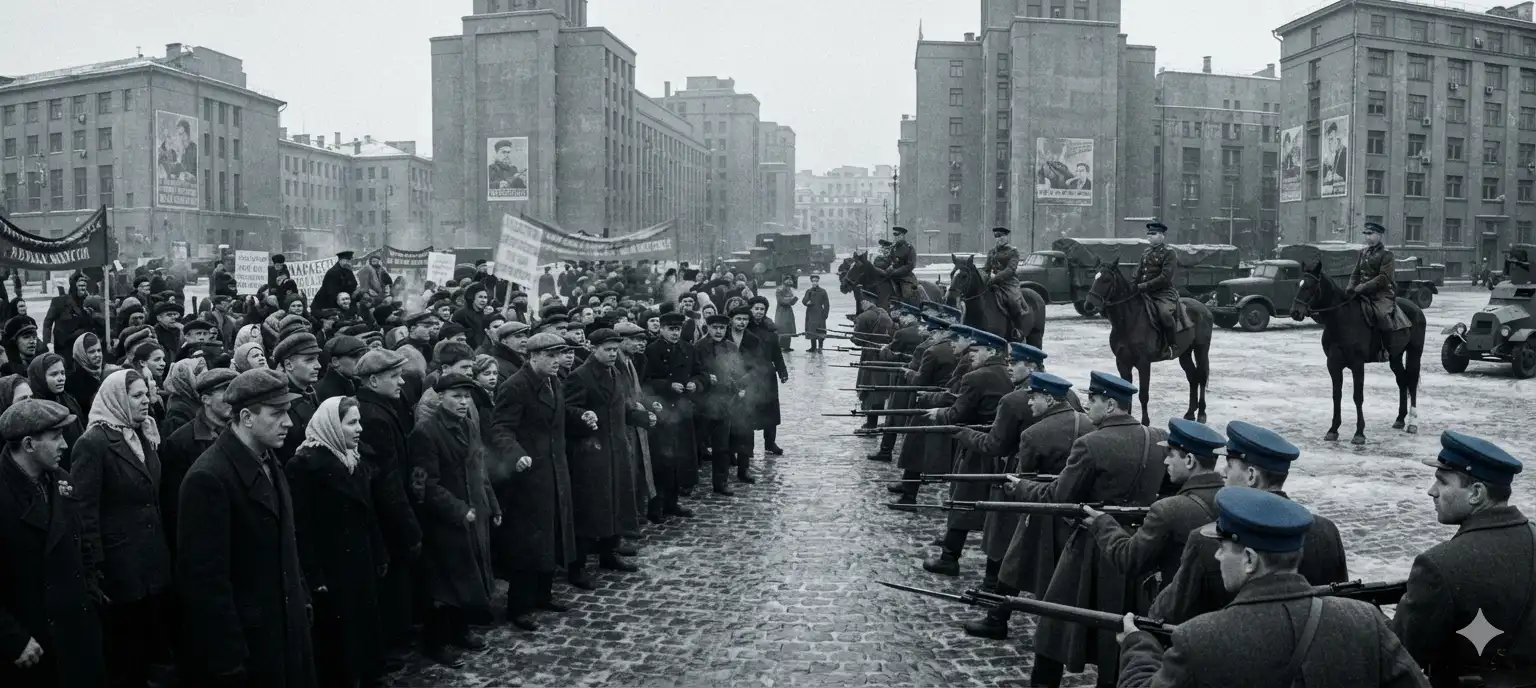
Following repeated military setbacks across multiple fronts, public confidence in Stalin's leadership began to erode. Wartime shortages, mounting casualties, and the continuous loss of Soviet territory created growing frustration among civilians, many of whom openly questioned the government's strategy and its ability to withstand the German advance. What initially began as isolated protests in Moscow soon spread to several major cities, drawing support from workers, students, and sections of the administrative workforce who were increasingly disappointed by the hardships of war and the lack of visible success on the battlefield.
As demonstrations grew in size, they evolved into a broader movement demanding accountability from the Soviet leadership. Although the protests lacked a unified organization or an alternative political vision, they reflected widespread dissatisfaction with Stalin's wartime decisions. Reports from security agencies warned that if left unchecked, the unrest could undermine national stability at a time when the country remained under immense military pressure. Viewing the movement as a direct threat to state authority, Stalin ordered a sweeping crackdown, directing the security services and loyal Party organizations to suppress demonstrations, arrest suspected organizers, and restore control before the unrest could develop into a larger internal crisis.
Determined to restore order, Stalin rejected calls for reform and instead responded with a sweeping crackdown. State security forces and internal military units were deployed across Moscow and other affected cities to suppress the unrest. Mass arrests targeted protest leaders, suspected organizers, and individuals accused of encouraging dissent, while public demonstrations were forcibly dispersed. Strict curfews were imposed, communication was closely monitored, and movement within major urban centers was heavily restricted. The decisive action quickly ended visible resistance but also created an atmosphere of fear and deepened public resentment toward the government. Although the revolt was crushed, its political influence remained. Confidence in the central leadership declined further, and discussions within military and Party circles increasingly questioned Stalin's rigid decision-making and the growing disconnect between the realities at the front and policies formulated in Moscow. While Stalin retained complete control of the Soviet Union, his authority came to rely more heavily on pressure than public support. With the war against Germany still far from over, the underlying discontent remained unresolved, leaving internal tensions to continue to build beneath the surface as the conflict entered an increasingly prolonged phase.
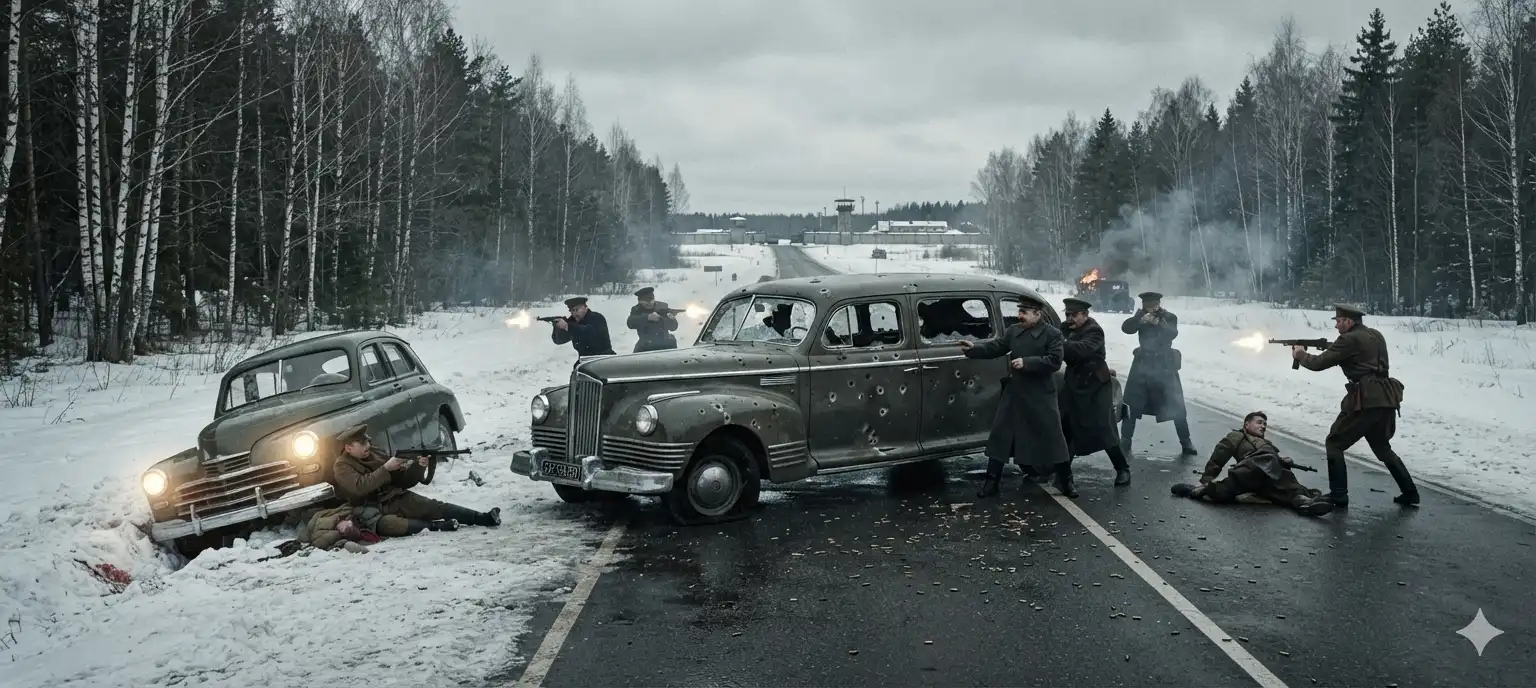
As military defeats continued to mount and political distrust spread through the Soviet leadership, Joseph Stalin found himself increasingly isolated despite the extensive security surrounding him. Although he remained firmly in power, divisions within the military, the Party, and the state security system had begun to weaken the unity that once protected his rule. During a heavily guarded journey between Moscow and Vladimir, Stalin traveled in a closely escorted convoy after the route had been secured in advance by Soviet security agencies. However, a breakdown in coordination between overlapping security units, combined with the actions of conspirators within the state apparatus, created a brief but critical gap in the protective journey. In the confusion that followed, armed attackers managed to strike Stalin's convoy before his bodyguards could fully respond. Stalin was hit multiple times during the attack and succumbed to his injuries shortly afterward, despite desperate efforts by his security personnel to evacuate him and provide medical assistance. His death was confirmed only after the convoy reached a secure military facility, marking the sudden end of his leadership and throwing the Soviet Union into its deepest political crisis since the beginning of the war.
News of Stalin's death threw the Soviet government into confusion as security forces rushed to secure key institutions and prevent a wider collapse. The public announcement was delayed while senior officials worked to establish continuity and maintain order. Although the Soviet state survived, Stalin's assassination dramatically altered its political direction. Power quickly shifted to senior military commanders and Party leaders, exposing divisions between those determined to continue the war at all costs and others who favored stabilizing the country through negotiation. The assassination marked a decisive turning point, ending Stalin's personal control and opening a new chapter of political and military uncertainty.
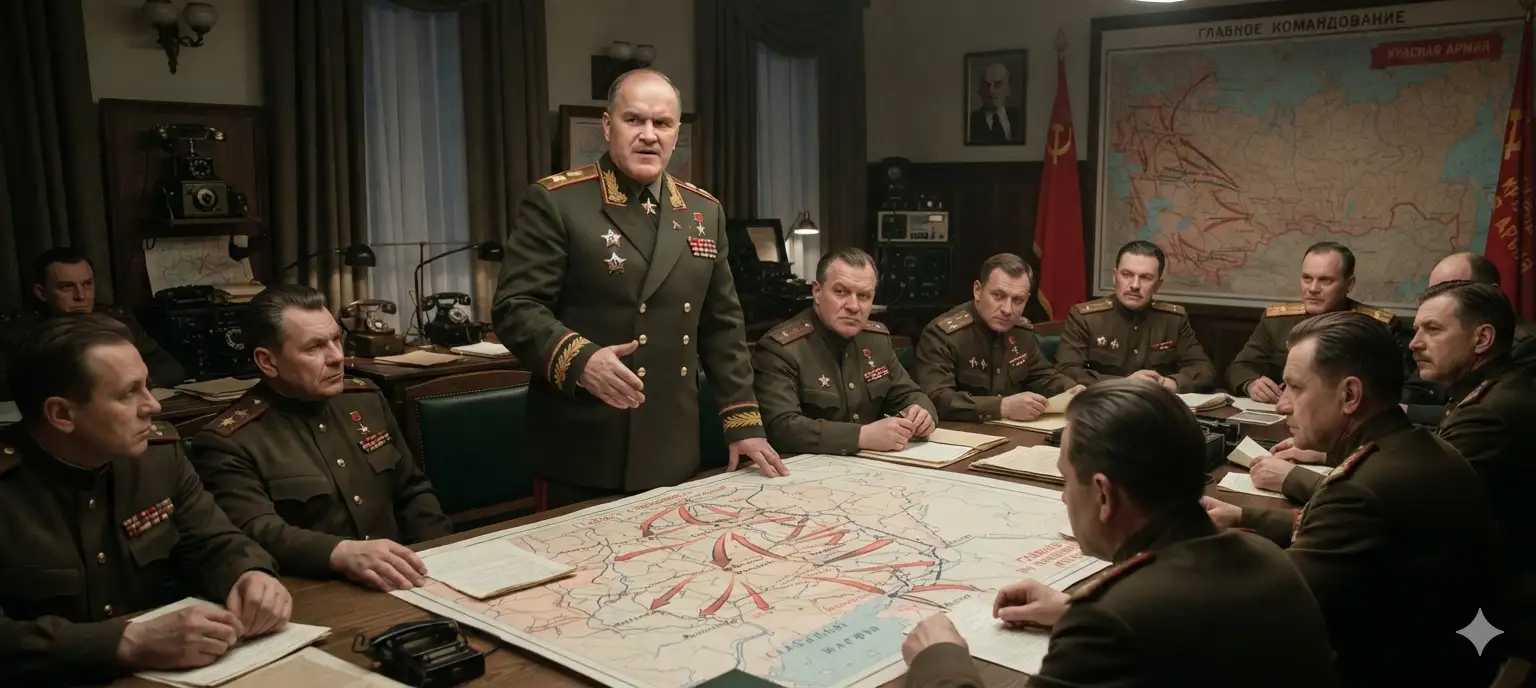
Following Joseph Stalin's assassination during his transfer from Moscow to Vladimir, the Soviet Union entered a period of political uncertainty as the government moved swiftly to prevent a collapse of central authority. Security forces secured Moscow, protected key communication networks, and worked to maintain order while ensuring the military chain of command remained intact. Within hours, senior military commanders and Party officials convened an emergency meeting, recognizing that with the war against Germany still raging, restoring stable leadership had become the nation's highest priority. After intense consultations, authority was transferred to Marshal Georgy Zhukov, the Soviet Union's most respected military commander. Although he had experienced setbacks during the early stages of the war, Zhukov retained the confidence of frontline officers and much of the military establishment. Upon assuming leadership, he focused on securing the loyalty of frontline commanders, restoring communication between scattered army groups, preventing internal power struggles, and reorganizing the remaining Soviet defenses. Instead of launching immediate counteroffensives, Zhukov adopted a strategy centered on preserving the Soviet state and rebuilding its military strength before considering any major offensive operations.
With Marshal Georgy Zhukov assuming leadership, the Soviet Union adopted a more pragmatic approach to the war. Intelligence from the front revealed that German forces had firmly consolidated their gains, constructing strong defensive positions across Smolensk, Vyazma, Ukraine, and the Baltic region. Acknowledging the weakened condition of Soviet forces after months of relentless fighting, Zhukov suspended plans for major offensives and instead prioritized rebuilding depleted divisions, restoring supply and railway networks, strengthening defensive lines, and reorganizing the Red Army for a prolonged conflict rather than seeking immediate territorial recovery. Alongside these military reforms, the new leadership cautiously explored diplomatic contacts with Germany in an effort to reduce active hostilities. Rather than signaling surrender, the initiative sought a temporary armistice that could stabilize the front, halt major offensives, and create space for humanitarian and logistical arrangements. Zhukov's leadership marked a decisive shift from Stalin's centralized political control to a military-driven strategy focused on preserving the Soviet state. While the government remained united behind him, its immediate objective was no longer outright victory but ensuring the survival of the Soviet Union until conditions allowed it to regain the strategic initiative.
Following Joseph Stalin's assassination and the rise of Marshal Georgy Zhukov, both Germany and the Soviet Union gradually moved toward ending large-scale hostilities. Exhaustion on both sides, combined with fixed front lines and the enormous cost of continued warfare, created favorable conditions for negotiations. After several rounds of indirect diplomatic talks, Adolf Hitler agreed to an armistice, bringing active combat on the Eastern Front to an end. The agreement recognized the military realities on the ground and established a new political order in Eastern Europe through the following terms:
The armistice fundamentally reshaped the balance of power in Eastern Europe. Germany emerged with control over vast new territories and strategic access to the eastern Baltic, while the Soviet leadership accepted the settlement as a necessary measure to preserve the remaining Soviet state and begin the long process of reconstruction.
Following the armistice, Germany undertook a limited strategic withdrawal on the central front by evacuating its forward positions at Vyazma and establishing the new operational frontier along the Smolensk line. The decision was based on long-term strategic considerations rather than military weakness, as German planners sought to replace exposed forward positions with a shorter, more defensible boundary supported by established rail networks, supply depots, and fortified logistics hubs. This allowed Germany to consolidate its vast territorial gains while reducing the burden of defending an overextended front. The post-armistice settlement fundamentally reshaped Eastern Europe. Germany retained control over a vast belt of territory stretching from the Baltic coast through Belarus and Ukraine to the Don Basin, creating substantial strategic depth and securing key economic and transportation corridors. The Soviet Union, though preserving its core interior regions, lost much of its western and northern frontier and entered a period of military reconstruction and political reorganization under Marshal Georgy Zhukov. Active warfare between the two powers came to an end, replaced by a tense but stable frontier centered on the Smolensk line and the Baltic region. Although neither side achieved complete victory, Germany emerged from the conflict in a dominant strategic position, while the Soviet Union turned its focus toward recovery and the long-term rebuilding of its strength.
As Europe settled into a fragile armistice, the war in the Pacific also drew to a close. Years of continuous fighting had exhausted Japan's military and industrial capacity, leaving its armed forces unable to sustain large-scale operations. With its infrastructure devastated and its overseas possessions becoming increasingly difficult to defend, Japan ultimately accepted surrender terms, bringing the Pacific War to a formal end. Japan's defeat marked a major turning point in global politics. The United States emerged as the dominant power across the Pacific, taking the lead in stabilizing occupied territories, restoring vital trade routes, and securing maritime communication lines. With hostilities finally over, the international balance of power began to shift, setting the stage for a new era of geopolitical rivalry and reconstruction.
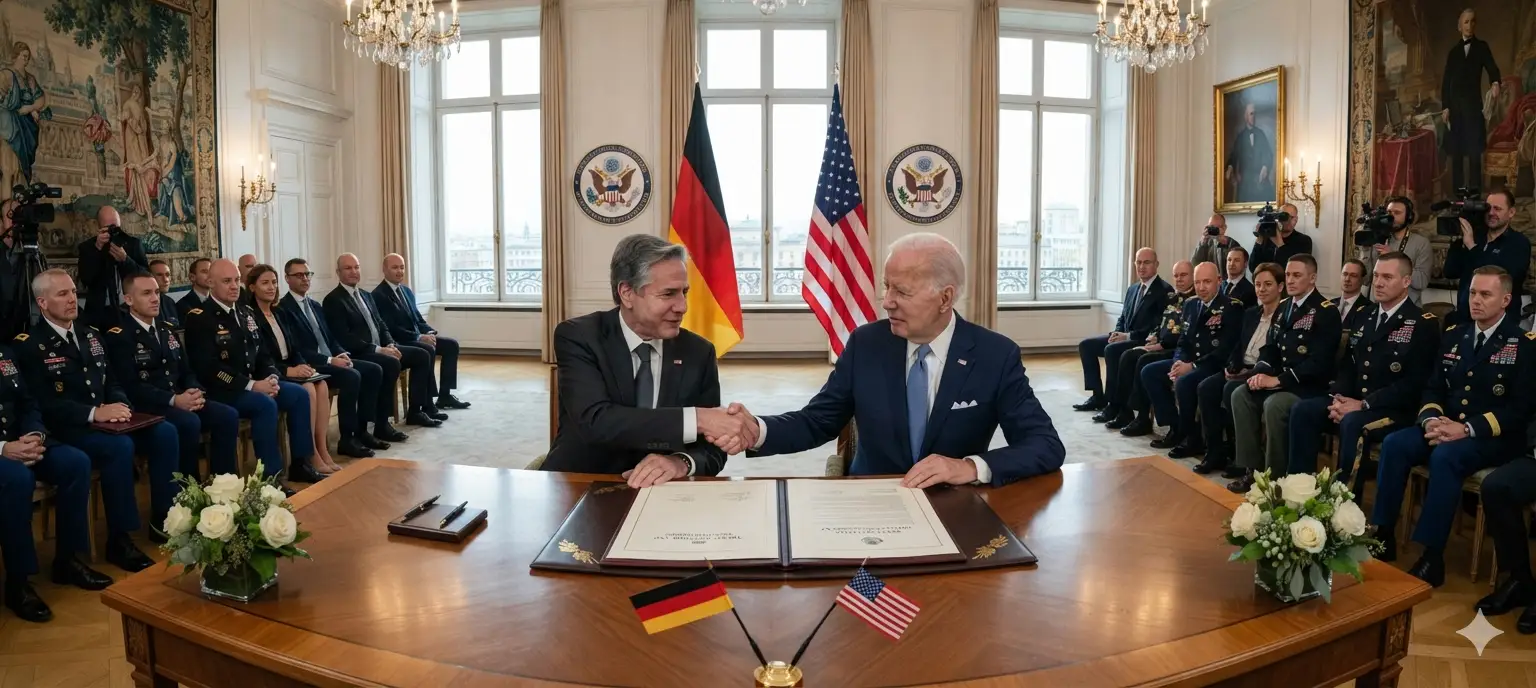
With the major theaters of war finally brought to an end, Germany and the United States gradually entered a new phase of diplomatic engagement. Although initial contacts remained cautious, both governments recognized that avoiding another global conflict was in their mutual interest. Germany acknowledged the United States as the world's leading industrial and economic power, while the United States accepted the political reality of a German-dominated Europe established under the armistice. As relations improved, the two nations established formal trade agreements covering industrial goods, raw materials, technology, manufacturing, and the stabilization of major maritime trade routes. These arrangements were driven by economic interests rather than military alliance, allowing both powers to expand prosperity without direct confrontation. The postwar world settled into a new geopolitical order. Germany dominated continental Europe, the Soviet Union focused on recovery under its new leadership, and the United States emerged as the leading maritime and economic power, overseeing reconstruction across the Pacific. Instead of immediate military rivalry, the major powers competed through diplomacy, trade, and regional influence, bringing the wartime era to a close and ushering in a tense but relatively stable international balance.
Germany emerged as the dominant continental power in Europe, extending its authority across Poland, Belarus, Ukraine, and the Baltic states. Strategic cities such as Kyiv and St. Petersburg came under German control, while the Smolensk line was established as the eastern frontier. This new boundary served as both a defensive barrier and an administrative zone, securing Germany's eastern territories and strengthening its economic influence across the continent.
The Soviet Union survived the war but in a significantly weakened position under its new military leadership. Although it retained Moscow and its vast interior territories, it lost much of its western frontier, including Ukraine and the Baltic region. The new government shifted its priorities toward rebuilding the country, restoring its economy, and strengthening its defenses rather than pursuing further expansion.
The United States emerged as the world's leading maritime and industrial power following the end of the Pacific War. Rather than seeking territorial expansion in Europe, it focused on controlling major sea lanes, restoring international trade, and expanding its influence through industrial production, technology, finance, and global commerce. Its economic reach became the foundation of post-war reconstruction and international trade.
Several nations played an important role in maintaining stability between the major powers. Finland remained closely aligned with Germany while preserving limited autonomy, and Turkey continued its policy of strategic neutrality by balancing relations with both Europe and neighboring regions. These buffer states helped reduce the risk of direct confrontation and contributed to regional stability.
The post-war world evolved into a tripolar balance of power. Germany dominated continental Europe, the Soviet Union concentrated on internal recovery and defense, and the United States led the global maritime and economic system. Rather than producing a single global victor, the war resulted in a divided but relatively stable international order, where influence was exercised through military strength, diplomacy, and economic power.
The United Kingdom remained an independent power after reaching a settlement with Germany. Although it withdrew from major continental affairs, it preserved much of its global influence through its overseas colonies in Africa and Asia. Britain continued to rely on its naval strength and diplomatic network, serving as an important maritime link between German-controlled Europe and the broader Atlantic world.
Italy retained its sovereignty after the war while operating within Germany's wider European economic sphere. Rather than pursuing an aggressive foreign policy, it focused on maintaining stability in the Mediterranean, facilitating regional trade, and acting as a southern buffer that reduced tensions between continental Europe and the maritime powers.
Spain remained outside the major power blocs and successfully preserved its neutrality. By avoiding direct military commitments, it strengthened its position as a western Mediterranean buffer state. Its strategic location allowed it to expand trade with multiple nations while helping maintain stability between the Atlantic and continental European spheres of influence.
Finland remained closely aligned with Germany under a framework of security cooperation, serving as a northern defensive buffer against the Soviet Union. Turkey continued its long-standing policy of strategic neutrality, balancing relations with Europe, the Middle East, and the Soviet Union. Its position helped prevent regional tensions from spreading into the Mediterranean and Caucasus, making it one of the key stabilizing powers of the post-war order.
As part of the broader post-war diplomatic settlement, Germany and Turkey concluded a separate bilateral treaty recognizing Turkey's wartime cooperation and its strategic importance in the southern theater. Under the terms of the agreement, Germany transferred Georgia and the adjoining Caucasus mountain region to Turkish administration, extending Turkey's northern frontier deep into the Caucasus. The acquisition placed several vital mountain passes and strategic routes under Turkish control, significantly enhancing its role as the gateway between Europe and Asia. In return, Turkey formally agreed to maintain stable diplomatic relations with Germany, secure and administer its newly acquired frontier, prevent hostile activities along the Caucasus border, and support the broader post-war balance established by the armistice. The settlement strengthened Turkey's position as a major regional power while reinforcing the stability of Germany's southern strategic flank.
Following the conclusion of the major wars, Adolf Hitler spent his remaining years overseeing the administration of the German Empire rather than directing military campaigns. With Europe's borders largely settled under the post-war agreements, his government focused on economic development, rebuilding infrastructure, and consolidating control over its vast territories. The relative stability of the period allowed the state to concentrate on governance instead of continued expansion. In his final years, Hitler viewed the territorial settlements and diplomatic agreements with the United Kingdom and the Soviet Union as the fulfillment of his long-term strategic objectives. After ruling for several more years, he died of natural causes, prompting extensive state ceremonies and an orderly transfer of power that ensured continuity within the government. By the time of his death, he had ruled over one of the largest states in modern European history. His leadership and the empire he built remained deeply controversial, with supporters pointing to Germany's position as a dominant continental power, while historians continued to debate the immense human, political, and social costs of the wars and policies that had reshaped Europe and profoundly affected millions of lives.
With the Second World War over and the major powers firmly established within their respective spheres of influence, the world entered a prolonged period of strategic rivalry instead of direct military conflict. The two dominant powers were Germany and the United States, each seeking to expand its influence through economic strength, technological advancement, diplomacy, and global partnerships. The United States relied on its unmatched naval power, industrial capacity, and international trade network to strengthen its position across the Americas and the Pacific, while Germany consolidated its vast European empire by integrating its territories through modern infrastructure, industrial development, and a unified continental economy. Russia, though weakened by the war and territorial losses, gradually rebuilt under its new leadership and moved closer to the United States. The memory of its conflict with Germany encouraged Moscow to strengthen diplomatic and economic ties with Washington, creating an informal counterbalance to German influence in Europe. The rivalry between Germany and the United States remained largely peaceful, unfolding through economic competition, scientific innovation, intelligence operations, and diplomatic maneuvering rather than open warfare. By the latter half of the twentieth century, the world had settled into a stable but divided order in which Germany dominated continental Europe, the United States led the global maritime and commercial system, and Russia re-emerged as a significant regional power aligned more closely with American interests.